Gluten Intolerance

Check food for gluten if it doesn’t agree with you

Scan the barcode with Bite Insight, a free app for UK supermarket food. With Gluten Intolerance in your profile it checks the ingredients and allergen info for wheat, barley, rye and oats. You get a red Warning card if it finds them and an amber card for traces. Not been tested for coeliac disease yet? Keep eating gluten until you have been.

Gluten doesn’t agree with you,
but you’re not coeliac

Non-coeliac gluten sensitivity is when gluten seems to cause symptoms like those of coeliac disease, without the gut damage. There’s no test for it. Doctors get there by ruling other things out first, and coeliac disease is the big one to check.

0
people in the UK have coeliac disease

That’s the NHS figure, and it’s at least 1 in 100. Coeliac UK says there’s no specific test for gluten sensitivity, so ruling out coeliac disease comes first.

0
of eating gluten before a coeliac test

NICE, which writes guidance for the NHS, says to eat some gluten in more than one meal every day for at least 6 weeks before testing. Cut it out early and the test may miss coeliac disease.

0
is the most gluten a “gluten free” food can have

Coeliac UK says only food with 20 parts per million of gluten or less can be labelled gluten free in the UK. The claim is voluntary, so plenty of food without gluten doesn’t carry it.

Quick guide

How to check a food for gluten in the shop

Wheat, barley, rye and oats are in the group UK law calls cereals containing gluten. On prepacked food they have to be named and emphasised in the ingredients list, usually in bold. “May contain” lines are voluntary, so not every maker uses them. The app can do a first check. The pack in your hand has the final say.

With Bite Insight

Let the app do the first check

  1. Add Gluten Intolerance to your profile

    You’ll find it under Allergies, when you sign up or later in settings. If you’ve been diagnosed with coeliac disease, pick Coeliac Disease under health conditions instead. It runs the same gluten check and adds a few ratings on top, starting with salt.

  2. Scan the barcode

    If wheat, barley, rye or oats turn up in the ingredients or allergen info, a red Warning card sits at the top and the matching ingredients are listed as harmful. Gluten listed as a trace gets an amber May contain card. With no ingredient list or allergen info, a Not checked card says so rather than guessing.

Scan your first product free
What a scan can tell you
  • WarningWheat, barley, rye, oats or another gluten source is in the ingredients or allergen info
  • May containGluten is listed as a trace, or in a “may contain” line
  • Not checkedNo ingredient list or allergen info, so check the pack

No card doesn’t mean gluten free. Read the pack.

Checking the pack yourself

Four checks on the pack

Read the bold words in the ingredients

Cereals containing gluten are one of the 14 allergens that must be emphasised on prepacked food. The label has to name the grain, such as wheat, barley, rye, oats or spelt. Look inside brackets too, because soy sauce, stock and malt vinegar can all bring wheat or barley with them.

Look for a gluten free claim

“Gluten free” means 20 parts per million or less. It’s the clearest sign you’ll get on a pack. It isn’t compulsory, though, so a food without the claim may still have no gluten ingredients. That’s where the ingredients list comes in.

Decide what you do about “may contain”

The FSA says there’s no legal requirement to put “may contain” on food, so the wording varies and a missing line proves nothing. How much a trace matters with gluten sensitivity varies from person to person. Your GP or a dietitian can help you work out where your line is.

Ask about loose and café food

Bread from the bakery counter or a meal in a café won’t have a barcode for the app to scan. The FSA says the business must still give you allergen information, written down or told to you. Food made and packed on site, like a sandwich made in store, needs a full ingredients list.

Get tested for coeliac disease before you cut gluten out

Coeliac UK says it’s important to rule out coeliac disease first, and doesn’t recommend trying a gluten free diet as a first step. The blood test only works while you’re eating gluten. NICE advises some gluten in more than one meal a day for at least 6 weeks before testing. Coeliac disease is a lifelong autoimmune condition, and knowing whether you have it changes how careful you need to be. If you think you have it, read our coeliac disease guide and talk to your GP.

Where gluten information sits on a UK label

Gluten grains

Where to find it
Ingredients list on prepacked food, emphasised (usually in bold)
What to look for
Wheat (including spelt and Khorasan wheat), barley, rye and oats.

“Gluten free”

Where to find it
Anywhere on the pack, often the front
What to look for
20ppm of gluten or less. It’s voluntary, so many suitable foods don’t say it.

May contain warnings

Where to find it
Near the ingredients or in an allergy advice box
What to look for
Lines like “may contain wheat”. Not a legal requirement, so wording varies.

Malt

Where to find it
Cereals, sweets, malt vinegar, beer
What to look for
Barley must be named. Coeliac UK says barley malt vinegar and malt extract are fine for coeliacs if the food has 20ppm of gluten or less. The app still flags them.

Oats

Where to find it
Ingredients list
What to look for
Oats are often grown and milled near wheat. Oats labelled gluten free are kept apart from it.

Loose food and eating out

Where to find it
Menu, a sign on the counter, or staff
What to look for
The business has to give you allergen information. Ask before you order.
Under the hood

How Bite Insight works this out

There’s no gluten score. The app reads the allergen tags and ingredient list held for the product, plus any traces data and “may contain” line, and matches them against your profile. It knows the grain names and the less obvious ones, like semolina, spelt, couscous, bulgur, malt extract and malt vinegar. It treats every oat as a gluten source, even oats labelled gluten free. It also flags modified starch, which is often made from maize, so some warnings will turn out to be fine. Buckwheat and maltodextrin are left alone. A “gluten free” claim on the pack doesn’t count as an ingredient, and the app never tells you a product is gluten free.

Bite Insight gives general food information, not medical advice, and it can’t promise a product is gluten free. Product data can be wrong or out of date, so read the pack every time. If you haven’t been tested for coeliac disease, see your GP before you cut gluten out. A dietitian can help you work out how strict you need to be.

Built around your intolerance

Bite Insight doesn’t give everyone the same results. Add Gluten Intolerance to your profile once and every scan checks for it.

Gluten Warning

Gluten warnings

If a product lists wheat, barley, rye or oats, a red Warning card sits at the top of the results. The app checks the ingredients and allergen info, including names that don’t look like grains, such as semolina or couscous.

Your intolerance
Wheat
Listed Warning
Barley
Traces May contain

Traces shown separately

A trace of gluten gets its own amber May contain card, so you can tell it apart from a product made with wheat. When there’s no ingredient list or allergen info, the app says it couldn’t check.

Flag feature preview, decorative

Flag anything else that bothers you

plus

Gluten is checked for free. If something else seems to set you off too, add it to your own list with Bite Insight+ and you’ll see an orange Flagged card whenever it turns up.

Feature spotlight

The cards you’ll see after a scan

There’s no gluten score. The app shows a card at the top of the results for each thing it finds that matters to your gluten intolerance.

No card Nothing in the product data matched. That isn’t a gluten free verdict, so read the pack
Not checked There’s no ingredient list or allergen info for this product, so the app couldn’t look
May contain Gluten is in the traces data or a “may contain” line in the ingredients
Warning Wheat, barley, rye, oats or another gluten source is in the ingredients or allergen info
Gluten check icon, decorative

From scan to confidence in seconds

A quick first check in the aisle. The pack still has the final say.

Scanning a food product barcode with a smartphone

Scan the barcode

Point your camera at the barcode, in the supermarket or at home. Or search for the product by name.

Bite Insight app showing a personalised gluten warning

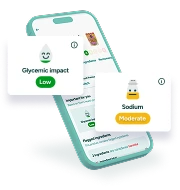
Get your insights

Bite Insight checks the ingredients and allergen info against your Gluten Intolerance profile and puts any warnings at the top, along with anything on your own avoid list.

A bowl of salad

Shop with confidence

Use the result to narrow things down, then check the pack before you buy. Recipes change, so read it every time.

Where you shop

Use it in the supermarkets you already go to

Bite Insight works with food from the big UK supermarkets, own-brand ranges included. If you shop in the UK, pick your supermarket in the app and swaps from that shop are shown first.

  • Tesco
  • Sainsbury’s
  • Asda
  • Morrisons
  • Aldi
  • Lidl
  • Waitrose
  • Co-op
  • M&S

Bite Insight isn’t linked to any of these supermarkets.

Start free. Upgrade when you’re ready.

The gluten check is free. Warnings, “may contain” cards and the full ingredient list on every scan, with no scan limit.

Select a version

Everything you need to spot gluten while you shop.

Bite Insight includes

Gluten warnings Warning, May contain and Not checked cards

Personalised alerts based on Gluten Intolerance and anything else in your profile

Full ingredient breakdown on every scan

200,000+ UK food and drink products

Free

No subscription or payment details required.

Get the free app

Extra tools for planning meals and shopping for the whole household.

Bite Insight+ includes

Flag any other ingredient you want to avoid
Family profiles so you can scan for others too
Global barcode scanning
Access to over 4.9 million products worldwide
Plan your meals for the week with the meal planner
Plus everything in the Free version
£3.99/ month

Subscription renews automatically. Cancel anytime.

Upgrade to Bite Insight+

Common questions

About using Bite Insight with a gluten intolerance.

Yes. Bite Insight is a free UK app that scans food barcodes and checks the ingredients and allergen info for gluten. Add Gluten Intolerance under Allergies and it looks for wheat, barley, rye and oats, including names like semolina, spelt and malt extract. You get a red Warning card if it finds them and an amber May contain card for traces. There’s no scan limit. Product data can be out of date, so read the pack too.

Coeliac disease is an autoimmune condition. Gluten damages the lining of the gut, and there are tests for it. Non-coeliac gluten sensitivity causes similar symptoms, but Coeliac UK says it’s not clear how the immune system is involved and there’s no sign of gut damage. There’s no specific test, so it’s diagnosed once coeliac disease and other causes have been ruled out. Our coeliac disease page covers the condition in more detail.

No. The coeliac blood test only works while you’re eating gluten. NICE advises eating some gluten in more than one meal every day for at least 6 weeks before testing, and Coeliac UK doesn’t recommend trying a gluten free diet first. If you’ve already cut it out, tell your GP, as you’ll probably need to eat it again before a test.

Pick Coeliac Disease if you’ve been diagnosed with it. It runs the same gluten check as Gluten Intolerance and adds ratings on top, starting with salt. Pick Gluten Intolerance, under Allergies, if coeliac disease has been ruled out and you’ve found gluten doesn’t suit you. It checks for gluten and leaves the ratings as they are.

Yes. The app counts every oat as a gluten source, including oats labelled gluten free, so porridge and granola will usually get a Warning. Oats contain a different protein to wheat, and ordinary oats can pick up wheat when they’re grown or milled. Whether gluten free oats suit you is something to work out with your GP or dietitian.

No. It tells you when it finds gluten, and when it couldn’t check. No card means nothing in the product data matched, not that the food is gluten free. Only the maker can put a gluten free claim on a pack, and in the UK that means 20 parts per million of gluten or less.

No. A wheat allergy is a reaction to proteins in wheat, and Coeliac UK says it usually happens within seconds or minutes of eating it. It can be serious. If your symptoms come on that fast, or you get swelling or trouble breathing, see your GP. In an emergency call 999.

No. Bite Insight gives food information to help you choose in the shop. It doesn’t diagnose anything. If gluten seems to cause you problems, see your GP before changing your diet so coeliac disease can be tested for properly. A dietitian can help you avoid gluten without missing out on fibre and other nutrients.