
Coeliac Disease

Check a food for gluten before you buy it

Scan the barcode with Bite Insight, a free app for UK supermarket food. With Coeliac Disease in your profile, it checks the ingredients and allergen info for wheat, barley, rye and oats. If it finds them you get a red Warning card. Traces show as an amber May contain card. It can only go on the product data, so read the pack too.

Eating safely with coeliac disease
is exhausting

Gluten isn’t only in bread and pasta. It can turn up in stock cubes, sauces and soups, and the names on the label aren’t always obvious. Checking every pack takes time.

0
People in the UK have coeliac disease

The NHS says at least 1 in 100 people in the UK have coeliac disease. Coeliac UK says nearly two thirds of them haven’t been diagnosed.

0
Years on average before diagnosis

Coeliac UK says adults wait 13 years on average for a diagnosis. The NHS says milder cases can be mistaken for other gut problems, such as IBS.

0
Allergens UK labels must highlight

Cereals containing gluten are one of them. The label has to name the grain, such as wheat, barley, rye or oats, and emphasise it in the ingredients list, usually in bold.

Quick guide

How to check a food for gluten in the shop

UK labels have to name gluten cereals and highlight them in the ingredients list. "May contain" warnings are voluntary, though, and a gluten-free claim can be anywhere on the pack. The app reads the product data for you, or you can check by hand.

With Bite Insight

Let the app read the small print

  1. Add Coeliac Disease to your profile

    Do it when you sign up, or later in settings. You don’t need to pick a gluten allergy as well, because coeliac disease adds the gluten check for you. Your profile then shows a Coeliac Disease chip on every scan.

  2. Scan the barcode

    If wheat, barley, rye or oats turn up, a red Warning card names them and they’re listed under Flagged ingredients. Traces show as an amber May contain card. If the ingredient list or allergen info is missing, a Not checked card tells you so rather than guessing.

Scan your first product free
How the app reports gluten
  • WarningA gluten source such as wheat, barley, rye or oats is in the ingredients or allergen info.
  • May containGluten is listed as a possible trace.
  • Not checkedThe ingredient list or allergen info is missing, so it couldn’t check fully.
  • No gluten listedNo card appears. That isn’t a gluten-free verdict, so read the pack.

Bite Insight never calls a product gluten free.

Checking the pack yourself

Four checks on the pack

Look for a gluten-free claim

Coeliac UK says only foods with 20 parts per million of gluten or less can be labelled gluten free. The rule has applied since January 2012. It covers specialist breads and flours, and everyday foods like soups and ready meals too.

Read the bold words in the ingredients

Cereals containing gluten are one of the 14 allergens that must be emphasised, usually in bold. The label has to name the grain, such as wheat, barley, rye, oats or spelt. Coeliac UK says even a tiny amount must be listed, so look inside brackets too, for things like soy sauce or stock.

Check for a ’may contain’ line

These warnings are voluntary. Coeliac UK says one means the maker has decided there’s an unavoidable risk of cross-contamination with gluten. If you’re not sure about a product, ask the maker or call Coeliac UK’s helpline. A gluten-free product can still say ’may contain wheat’. That’s aimed at people with a wheat allergy, and the food still has to meet the 20ppm limit.

Check again next time

Coeliac UK says to read the label every time you buy, because recipes and the way a product is made can change without warning. A product that was fine last month might not be now.

Some ingredients from gluten grains are fine

Coeliac UK says glucose syrup made from wheat or barley, wheat-based maltodextrin and distilled spirits are safe for people with coeliac disease, and the label doesn’t have to name the cereal they came from. Bite Insight may still show a Warning if the label mentions wheat, so read it yourself. Barley malt extract is different. Cambridge University Hospitals says to avoid it unless the product is labelled gluten free.

Where to find gluten information on a UK label

Gluten-free claim

Where to find it
Anywhere on the pack, often the front
What to look for
’Gluten free’ means 20ppm or less. ’No gluten-containing ingredients’ can’t go on single products any more, only on a group such as a menu section.

Gluten cereals

Where to find it
Ingredients list, emphasised (usually in bold)
What to look for
Wheat (including spelt and Khorasan wheat), barley, rye and oats. Check bracketed ingredients too.

’May contain’ warning

Where to find it
Near the ingredients or in an allergy advice box
What to look for
Wording like ’may contain gluten’ or ’made on a line handling wheat’. It’s voluntary, so not every maker uses it.

Oats

Where to find it
Ingredients list
What to look for
Coeliac UK says most people with coeliac disease can eat oats labelled gluten free, and oats without that label should be avoided. Bite Insight flags oats as a gluten source, so check whether the pack says gluten free.

Barley malt extract

Where to find it
Ingredients list, often in cereals, bars and chocolate
What to look for
Cambridge University Hospitals says to avoid it unless the product is labelled gluten free or listed in Coeliac UK’s Food and Drink Directory.

Modified starch

Where to find it
Ingredients list
What to look for
Cambridge University Hospitals says plain modified starch comes from a gluten-free grain, but modified wheat starch isn’t suitable. Bite Insight treats all modified starch as a gluten source and may show a Warning, so check which one it is.
Under the hood

How Bite Insight works this out

There’s no gluten score. On a coeliac profile, Bite Insight treats gluten as an allergy. It looks at the product’s allergen info and ingredient list for the grain names and other gluten words, like malt extract, semolina and spelt. It also reads the traces data and any "may contain" line. A match gives a Warning card and traces give a May contain card. If the data’s missing, you get Not checked. It never says a product is gluten free. Only the maker can put that claim on the pack, and only for foods with 20ppm of gluten or less.

Bite Insight gives general food information, not medical advice, and it can’t promise a product is gluten free. Product data can be wrong or out of date, so always read the pack. If you’ve just been diagnosed, talk to your GP or a dietitian about what to eat. Coeliac UK’s helpline is 0333 332 2033.

Built around your condition

Bite Insight does not give everyone the same results. Set your coeliac profile once and every scan is filtered through your specific needs.

Sodium High

Salt, digestive load and additives

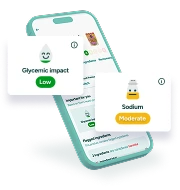
Coeliac disease makes the salt traffic light on the Nutrition tab stricter. After a scan you’ll usually see three ratings from Low to Very High: Sodium, worked out from the salt per 100g, then Digestive load and Additives.

Important for you
Wheat
Contains Warning
Barley
Traces May contain

Personalised coeliac warnings

Add coeliac disease to your profile and gluten is checked for you, with no need to pick a separate gluten allergy. A red Warning card appears if wheat, barley, rye or oats are in the ingredients, and an amber May contain card if they’re listed as traces.

Flag feature preview, decorative

Flag ingredients to avoid

plus

The coeliac profile already flags barley malt, wheat starch, rye flour and other gluten sources for free. With Bite Insight+ you can add anything else you want to avoid, and it shows in an orange Flagged card.

Feature spotlight

Salt is usually the first rating you’ll see

A coeliac profile puts Sodium at the top of your ratings and makes the salt traffic light on the Nutrition tab stricter. The rating is worked out from the salt per 100g on the label, so allow for your portion.

Low Not much salt for its weight
Moderate Some salt, so check the portion
High A lot of salt for its weight
Very High Very salty for its weight
Sodium rating showing a low level

From scan to confidence in seconds

No more squinting at labels and second-guessing yourself.

Scanning a food product barcode with a smartphone

Scan the barcode

Point your camera at the barcode, or search for the product by name.

Bite Insight app showing personalised coeliac nutrition breakdown

Get your insights

Bite Insight checks the ingredients and allergen info against your coeliac profile. It shows any gluten cereals it finds, any “may contain” traces, and your own flags if you have Bite Insight+.

Making a confident, informed food choice

Shop with confidence

Use the result to narrow things down, then check the pack before you buy. Coeliac UK says to read the label every time, because recipes can change.

Real experience

“I was told for years it was IBS before I was finally diagnosed with coeliac disease. Bite Insight helps me feel confident in the supermarket. It catches the things I miss, like barley in stock cubes or wheat in soy sauce. I feel so much more in control.”

Priya

Coeliac diseaseDiagnosed 3 years ago

Start free. Upgrade when you’re ready.

The core tools for managing coeliac disease are completely free. Gluten detection, personalised warnings, and full ingredient breakdowns on every scan.

Select a version

Everything you need to start making safer food choices with coeliac disease.

Bite Insight includes

Gluten risk indicator Gluten Free, Traces, Contains Gluten, High Gluten

Personalised warnings based on your coeliac profile

Full ingredient breakdown on every scan

200,000+ UK food and drink products including popular restaurants

Free

No subscription or payment details required.

Get the free app

Extra tools for people who want deeper control over what goes in their basket.

Bite Insight+ includes

Family profiles
Create and manage family profiles
Flag ingredients
Flag ingredients you want to avoid
Meal planner
Plan your meals for the week with the meal planner
Global barcode scanning
Barcode scanning for Global products
(Access to over 4.9 million products, powered by a global food database)
Everything in Free
Plus, everything in the Free version
£3.99/ month

Subscription renews automatically. Cancel anytime.

Upgrade to Bite Insight+

Common questions

About using Bite Insight with coeliac disease.

The quickest way is to scan the barcode with a free app like Bite Insight, then check the bold words in the ingredients list. With Coeliac Disease in your profile, Bite Insight looks for wheat, barley, rye and oats. It shows a red Warning card if it finds them, or an amber May contain card for traces. Then read the pack yourself. Only foods labelled gluten free meet the legal limit of 20ppm, and a ’may contain’ line matters too.

Check first. Coeliac UK says a ’may contain’ warning means the maker has decided there’s an unavoidable risk of cross-contamination with gluten. These warnings are voluntary, and FSA guidance says they should only be used once a risk like that has been found. A product labelled gluten free can still say ’may contain wheat’. That’s for people with a wheat allergy, and the food still has to meet the 20ppm limit. If you’re unsure, contact the maker or Coeliac UK’s helpline.

Oats don’t contain gluten themselves, but the NHS says they can cause a reaction if they’re produced in the same place as wheat, barley or rye. Coeliac UK says most people with coeliac disease can eat oats labelled gluten free, and that oats without that label should always be avoided. The NHS adds that a small number of people get symptoms even from pure oats. If you’re not sure, ask your GP or dietitian before adding them.

Yes. Pick Coeliac Disease in your health profile when you sign up, or later in settings. Gluten is then checked on every scan, including less obvious sources like barley malt extract, wheat starch, rye flour and spelt. You’ll also see ratings for sodium, digestive load and additives. It works from the product data, so read the pack as well.

There’s no gluten score. If the ingredients or allergen info include wheat, barley, rye, oats or another gluten source, you get a red Warning card naming them, and they’re listed as flagged ingredients. Traces show as an amber May contain card. If the ingredient list or allergen info is missing, a Not checked card says so. The app never calls a product gluten free, so check the pack.

Yes. If gluten is in a product’s traces data, or in a “may contain” line in the ingredients, you’ll see an amber May contain card near the top of the result. It can only go on what the product data holds, so check the pack too. If you’re unsure about a product, Coeliac UK suggests asking the maker or calling its helpline.

You don’t need to for the usual ones. The coeliac profile already flags wheat, barley, rye, oats, spelt, malt extract, semolina, couscous and other common gluten sources for free. With Bite Insight+ you can add your own extra ingredients, and they show in an orange Flagged card. Coeliac UK says glucose syrup made from wheat is fine for people with coeliac disease, though Bite Insight may still flag it if the label says wheat.

No. Bite Insight provides educational food insights to help you make more informed choices at the point of purchase. It is not a substitute for advice from your GP, gastroenterologist, or registered dietitian. Always follow the guidance of your healthcare team and use Bite Insight as a tool to support that care, not replace it.