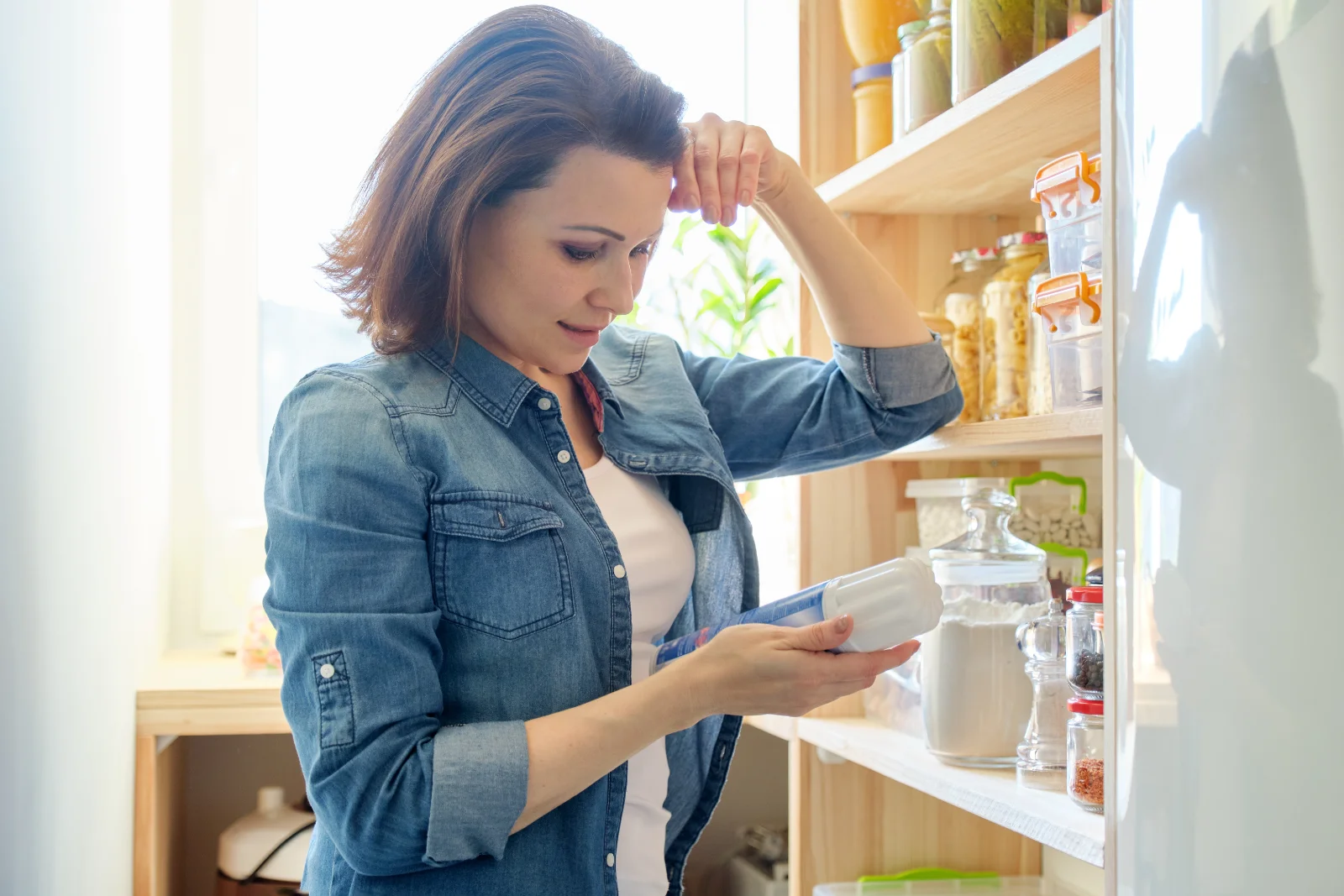

You're standing in the supermarket aisle. You pick up a packet of something — let's say a granola bar — and flip it over. Calories. Fat. Saturated fat. Sugars. Fibre. Salt. Per 100g. Per serving. Green dots, amber dots, red dots. And then the ingredients list, which seems to be written in a language you last encountered in GCSE Chemistry.
Sound familiar? You're not alone. Despite the UK's food labelling system being one of the most detailed in the world, the reality is that most of us scan the front of the pack, feel vaguely reassured (or vaguely alarmed), and drop it in the basket. Or put it back. We're essentially guessing.
But 2026 is a pivotal year for UK food labelling. Major new advertising restrictions on unhealthy food have kicked in, a survey found nearly half of popular sandwiches qualify for a "high salt" warning, and health claims on the front of packs are as loud as ever. It's time to close that knowledge gap — and we're here to help.
Why Food Labels Are More Important Than Ever
The UK's approach to food labelling has historically been strong — the traffic light system, mandatory allergen declarations, calorie counts — but 2026 marks a new chapter. On 5 January 2026, sweeping restrictions on advertising of foods that are high in fat, salt or sugar (HFSS) came into force across TV, on-demand services, and paid online media. The intention was clear: reduce the marketing power of unhealthy products.
But here's the thing: while those products can no longer be advertised in the same way, they're still on shelves. They can still carry on-pack claims like "natural", "wholesome", or "made with real fruit". And those claims remain largely unregulated in the way advertising is.
At the same time, the government updated its Nutrient Profile Model in 2026, shifting the focus from "total sugars" to "free sugars" — a meaningful distinction that changes how thousands of products are assessed for healthfulness. The rules are evolving. And that means it's worth learning how to read labels yourself, rather than relying on marketing.
The Traffic Light System: Your First Line of Defence
If you've shopped in a UK supermarket in the last decade, you'll have seen the front-of-pack traffic light labels. The coloured circles (or squares) indicate whether levels of fat, saturated fat, sugar, and salt are low (green), medium (amber), or high (red), based mainly on the amount per 100g.
- Green — Low: Go for it. Levels are low enough that eating this won't meaningfully push you over daily limits.
- Amber — Medium: Fine in moderation. Most amber-labelled foods can be part of a balanced diet when not eaten in excess.
- Red — High: Worth thinking about. Not forbidden, but try to limit how often you eat foods with red labels.
The key principle: aim for more greens, be mindful of reds, and pay attention when there are multiple reds on a single product. But here's the nuance the traffic light system often misses — context matters. A small cube of mature cheddar might flash red for saturated fat, but if you're only eating 20g with an apple, that's very different to eating 100g on a plate of chips.
Tip: Always check whether the traffic light numbers refer to a "per serving" or "per 100g" measurement. "Per serving" can be misleading — manufacturers sometimes define a serving as unrealistically small to keep the numbers looking better.
The Big Four: What to Actually Watch
The British Heart Foundation and British Dietetic Association both recommend focusing on four key nutrients when scanning a label. These are the ones most directly linked to chronic health conditions including heart disease, type 2 diabetes, high blood pressure, and obesity:
- Total fat: high is more than 17.5g per 100g. Not all fat is bad — unsaturated fats from nuts, oily fish, and avocado are beneficial. It's saturated fat you need to watch more carefully.
- Saturated fat: high is more than 5g per 100g. Strongly linked to raised LDL cholesterol and cardiovascular risk. Commonly hidden in processed foods, biscuits, pastry, and ready meals.
- Sugars: high is more than 22.5g per 100g. From 2026, the updated Nutrient Profile Model focuses on "free sugars" — added sugars and those from honey, syrups, and fruit juice concentrates. Naturally occurring sugars in whole fruit and milk are treated differently.
- Salt: high is more than 1.5g per 100g. The UK's most significant hidden dietary risk. Adults should eat no more than 6g of salt per day — but the average is closer to 8g, largely from processed and packaged foods.
The Hidden Salt Crisis: It's Everywhere
If there's one nutrient to be most vigilant about in 2026, it's salt — and new research has made the scale of the problem impossible to ignore. A comprehensive study of 546 sandwiches sold across major UK supermarkets and high street chains found that nearly half qualified for a "high" red warning on salt.
To put this in perspective: a single lunchtime sandwich from a high-street chain can contain over 2g of salt — that's a third of your recommended daily intake in one item. Add a packet of crisps and a flavoured yoghurt, and you've blown your daily salt budget before dinner.
Salt is so prevalent in processed foods because it's cheap, improves texture, extends shelf life, and — frankly — makes food taste more palatable, often masking lower-quality ingredients. The charity Action on Salt notes that the government updated its Nutrient Profile Model in 2026 partly in response to campaigners' pressure, but real change at the manufacturer level remains slow.
Pro tip on salt: "Sodium" and "salt" are different numbers. If a label only shows sodium, multiply by 2.5 to get the salt equivalent. E.g., 0.5g sodium = 1.25g salt.
The lesson here isn't to avoid all processed food — that's neither practical nor necessary. It's to develop the habit of checking, comparing, and being aware. A supermarket own-brand equivalent of the same sandwich might contain 30–40% less salt. You'd only know if you looked.
The Sugar Trap: When "Low Fat" Isn't What It Seems
Here's one of the oldest tricks in the food industry playbook: when fat is removed, something needs to replace it — or the product tastes terrible. That something is almost always sugar (or salt, or both). Which means that reaching for a "low-fat" or "reduced-fat" product without reading the nutrition panel is a genuine trap.
A reduced-fat flavoured yoghurt, for example, might be lower in saturated fat — but have added sugars running at 15g or more per 100g. Compare that to full-fat Greek yoghurt with no added sugar, which typically contains around 4–5g of naturally occurring lactose sugars. The "low fat" version looks healthier on the front; the nutrition table tells a different story.
The British Dietetic Association is explicit on this point: use the per 100g column (not the per-serving column) to compare products accurately. It removes the serving size variable and lets you make fair, like-for-like comparisons.
Allergen Labelling: What You're Legally Entitled to Know
For the approximately 2 million people in the UK living with food allergies — and many more with intolerances — label reading isn't a wellness choice. It's a matter of safety.
Since Natasha's Law came into force in October 2021, all food businesses in the UK are required to label any food that is "prepacked for direct sale" (PPDS) — including sandwiches, salads, and baked goods prepared and wrapped on-site — with a full ingredient list, with the 14 major allergens highlighted in bold.
Those 14 allergens are:
- Celery
- Cereals containing gluten (including wheat, rye, barley, and oats)
- Crustaceans (prawns, crabs, lobster)
- Eggs
- Fish
- Lupin
- Milk
- Molluscs (mussels, oysters, squid)
- Mustard
- Peanuts
- Sesame
- Soybeans
- Sulphur dioxide and sulphites
- Tree nuts (almonds, cashews, walnuts, pecans, pistachios, etc.)
Understanding the Ingredients List
Beyond the nutrition panel, the ingredients list is one of the most honest things on a food package — and one of the most ignored. Here's how to read it:
- Ingredients are listed in descending order of weight. Whatever appears first makes up the largest proportion of the product. If sugar or palm oil is in the first three ingredients of something marketed as a "healthy snack", that's your answer.
- Sugar wears many disguises. Manufacturers often use multiple names to prevent sugar appearing high up the list. Watch for: glucose syrup, fructose, dextrose, maltose, corn syrup, fruit juice concentrate, and "evaporated cane juice".
- The shorter, the better — usually. A long ingredients list with many unrecognisable names often (not always) indicates a heavily processed product. This isn't a hard rule, but it's a useful starting point.
- Allergens are bolded. In the EU and UK, the 14 major allergens must be emphasised in some way — usually bold — within the ingredients list. Scan for them.
The HFSS Advertising Ban: What It Means for Shoppers
Since January 2026, food and drink products that are "high in fat, salt or sugar" (HFSS) can no longer be advertised on TV before 9pm or in paid online media at any time. It's a landmark public health measure — but one that's created an interesting tension.
Products that are too unhealthy to advertise can still carry on-pack claims. A bag of crisps that can't be marketed as a "great choice for families" on Instagram can still have "natural potato flavour" on its packaging in a large, friendly font. Campaigners and nutritionists have called this inconsistency "unacceptable".
For you as a shopper, the practical implication is this: front-of-pack claims and brand identity are marketing. The nutrition table on the back is data. When in doubt, ignore the front and go straight to the numbers.
How Technology Is Changing the Way We Read Labels
Reading food labels is a skill that takes time to develop — and even experts acknowledge it's impractical to mentally cross-reference allergens, calculate daily allowances, and evaluate ingredient quality every time you reach for something off a shelf. Which is where technology comes in.
A new generation of food scanning apps has emerged to do the heavy lifting. Rather than giving you generic traffic light information, the best of these personalise the data to your specific health situation, dietary goals, and restrictions. If you have IBS, the app flags high-FODMAP ingredients. If you're managing hypertension, it flags high-sodium products. If you're a parent managing a child's peanut allergy, it alerts you to trace amounts buried in long ingredients lists.
This is the premise behind Bite Insight — an app built around the idea that nutritional information should be personalised, not generic. Scanning a barcode shouldn't give you the same readout whether you're a 22-year-old gym-goer or a 58-year-old managing type 2 diabetes. Because the same food can be fine for one person and genuinely problematic for another.
A Quick-Reference Label-Reading Checklist
The next time you're in a supermarket, try this five-step approach:
- Check the traffic lights first — how many reds are there? For everyday foods, aim for all-green or majority-amber.
- Look at per 100g, not per serving — especially for salt and sugar, where portion sizes are often understated.
- Read the first three ingredients — if sugar, refined flour, or saturated fat features heavily in the first three, treat the product accordingly.
- Scan for allergen highlights — even if you don't have a formal allergy, intolerances to dairy, gluten, or soy are common and often undiagnosed.
- Be sceptical of front-of-pack claims — "natural", "wholesome", "less sugar than the original", "made with real fruit" are marketing, not medical. The back of the pack is the truth.
The Bigger Picture: Taking Control of Your Food Choices
There's a real irony in the fact that UK food labels are among the most information-dense in the world, yet consumer confusion has never been higher. We have more data than ever — and less confidence in what it means.
The good news is that label literacy is a learnable skill. It takes a few weeks of deliberate practice — comparing products, looking at the back panel instead of the front, questioning health claims — before it becomes second nature. Most people find that once they start reading labels properly, they don't stop. The patterns become clear quickly: the salt in "healthy" soups, the sugar in "low-fat" yoghurts, the saturated fat in the crackers that always seemed like a sensible snack.
In 2026, with new advertising rules, updated nutritional guidelines, and allergen rules still tightening, the landscape is changing fast. But the core principle remains the same: food companies are in the business of selling food. You're in the business of looking after yourself (and your family). The more you understand about what's in your food, the better placed you are to make choices that actually work for your health — not theirs.
Zero guesswork. Just facts.