


GERD & Acid Reflux

Spot possible reflux triggers while you shop

Scan the barcode with Bite Insight, a free app for UK supermarket food. It marks ingredients often linked to heartburn, like tomato, chocolate, coffee, alcohol and chilli, and rates digestive load and saturated fat from Low to Very High. Triggers differ from person to person, so it can’t tell you which ones will set yours off.

Managing GERD through diet
is harder than it sounds

Trigger foods are different for everyone. And many of the worst offenders are hidden inside processed products with no obvious warning on the label.

0
UK adults can be affected by heartburn

Guts UK says heartburn affects up to 1 in 4 adults in the UK. When it keeps coming back, the NHS says it may be called GORD (gastro-oesophageal reflux disease).

0
Between your evening meal and bed

The NHS suggests not eating within 3 or 4 hours of bed, and having smaller, more frequent meals. Guts UK says to eat your main evening meal at least three hours before you go to bed.

0
Caffeine per litre before a drink needs a warning

Drinks other than tea and coffee with more than 150mg of caffeine per litre must carry a ‘High caffeine content’ warning. Guts UK says caffeinated drinks, such as tea, coffee and some energy drinks, can cause heartburn.

Quick guide

How to check a food for reflux triggers in the aisle

UK labels show fat, but nothing on the pack tells you whether a food is likely to bring on heartburn. So you end up reading the ingredients for tomato, citrus, chocolate or coffee, then checking the nutrition table for fat. The app can do that reading for you. Or you can check the pack yourself.

With Bite Insight

Let the app read the label

  1. Add GERD / Acid Reflux to your profile

    Do it when you sign up, or later in settings. The option is called GERD / Acid Reflux and sits under health conditions. Once it’s set, a scan shows a digestive load rating and a saturated fat rating side by side, as long as the product has fat figures on file.

  2. Scan the barcode

    Both ratings run from Low (green) to Very High (red) and are worked out per 100g. Further down, ingredients on the app’s reflux list get a red cross. Think tomato paste, citric acid, cocoa, peppermint oil or coffee. If there’s no ingredient list on file for a product, there’s nothing to flag, so check the pack.

Scan your first product free
Your digestive load rating
  • Low
  • Moderate
  • High
  • Very High

Worked out from fat and fibre per 100g, so allow for your portion.

Checking the pack yourself

Four checks on the pack

Check the fat figure

The NHS lists fatty foods among the things that can bring on heartburn. On a UK label, more than 17.5g of fat per 100g is high and 3g or less is low. Ingredients are listed by weight, biggest first. If cream, butter or oil comes near the top, the NHS says the product is likely to be high in fat.

Look at saturated fat too

It sits under fat as ’of which saturates’ and counts towards the total. The NHS says more than 5g per 100g is high and 1.5g or less is low. Bite Insight gives it its own rating, and the GERD profile makes the fat and saturated fat traffic lights on the Nutrition tab stricter.

Read the ingredients for common triggers

The NHS names coffee, tomatoes, alcohol, chocolate and fatty or spicy foods. Guts UK adds citrus juice and fizzy or hot drinks. These often turn up inside sauces, ready meals and snacks, so the ingredients list is where you’ll find them.

Think about when you’ll eat it

The NHS suggests smaller, more frequent meals and not eating within 3 or 4 hours of going to bed. Guts UK says to have your main evening meal at least three hours before bed and to avoid late-night, high-fat meals.

Triggers are personal

Guts UK says there’s no one approach to diet and reflux, and triggers can be very individual. A red cross on tomato doesn’t mean tomato bothers you. If you keep getting heartburn, the NHS suggests speaking to a pharmacist. See a GP if you have it most days or pharmacy medicines aren’t helping.

Where to find each thing on a UK label

Fat

Where to find it
Front-of-pack traffic light (if shown) and the back table, per 100g column
What to look for
NHS bands: more than 17.5g is high (red), 3g or less is low (green).

Saturated fat

Where to find it
Back table, under fat as ’of which saturates’
What to look for
More than 5g per 100g is high, 1.5g or less is low.

Tomato and citrus

Where to find it
Ingredients list
What to look for
Tomato paste, purée or powder, lemon, lime or orange juice. Bite Insight also flags citric acid and vinegar.

Chocolate

Where to find it
Ingredients list
What to look for
Chocolate, cocoa, cocoa butter, cocoa mass. Bite Insight also flags peppermint oil, mint and spearmint.

Caffeine

Where to find it
Ingredients list, plus a warning on some drinks
What to look for
Coffee, coffee extract, caffeine. Drinks other than tea and coffee with more than 150mg per litre must say ’High caffeine content’.

Spicy food

Where to find it
Ingredients list, often in sauces and seasonings
What to look for
Chilli, cayenne, hot pepper, jalapeño, including powders. Bite Insight also flags onion and garlic.
Under the hood

How Bite Insight works this out

Digestive load is Bite Insight’s own rating. It looks at the fat and fibre per 100g on the label, and the more of both a product has, the higher it goes. The result lands in Low, Moderate, High or Very High. It doesn’t measure acidity and it doesn’t know your personal triggers. The bands are the app’s own and don’t line up with the NHS fat bands, partly because fibre pushes the rating up too. Trigger ingredients are checked separately, by name, in the ingredients list.

Bite Insight gives general food information, not medical advice. Its ratings and flags can’t tell you what will cause your symptoms. Speak to a pharmacist if you keep getting heartburn. The NHS says to see a GP if you have heartburn most days or pharmacy medicines aren’t helping. The same goes if you also have symptoms like food getting stuck in your throat, being sick a lot or losing weight for no reason.

Built around your condition

Bite Insight does not give everyone the same results. Set your GERD profile once and every scan is filtered through your specific needs.

Digestive Load Very High

Digestive load and saturated fat

With GERD / Acid Reflux in your profile, a scan shows two ratings from Low to Very High, as long as the product has fat figures on file. Digestive load comes from the fat and fibre per 100g. Saturated fat gets its own rating next to it.

Limit
Total Fat
18g/100g High
Sat. Fat
9g/100g High

Trigger ingredients, flagged

Choose GERD / Acid Reflux in your profile and Bite Insight puts a red cross next to ingredients on its reflux list. Tomato, citrus juice, vinegar, chocolate and cocoa, mint, coffee and caffeine, chilli, onion, garlic, alcohol and fizzy water are all on it. The fat and saturated fat traffic lights get stricter too.

Flag feature preview, decorative

Flag your personal triggers

plus

Add the specific ingredients that set off your symptoms to your personal avoid list. Bite Insight will flag them automatically every time they appear in a product you scan.

Feature spotlight

See the fat and fibre load at a glance

The NHS lists fatty foods among common heartburn triggers. Digestive load gives you a quick read on how much fat and fibre a product has per 100g, from Low to Very High. Trigger ingredients are flagged separately, in the ingredients list.

Low Little fat and fibre per 100g
Moderate Some fat or fibre. Keep an eye on the portion
High A fair amount of fat, fibre or both
Very High Lots of fat, fibre or both. A smaller portion may sit better
Digestive load indicator showing a low level

From scan to confidence in seconds

Know what you are eating before symptoms tell you.

Scanning a food product barcode with a smartphone

Scan the label

Point your camera at any food barcode or label. In the supermarket, at home, or eating out.

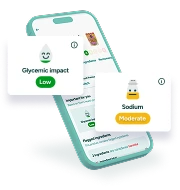
Bite Insight app showing personalised GERD food breakdown

Get your insights

Bite Insight checks the product against your GERD profile. You see digestive load and saturated fat ratings, and any ingredients on its reflux list get a red cross.

Making a confident, informed food choice

Eat with confidence

Make food decisions that are right for you, with the information you need before symptoms have a chance to catch you out.

Real experience

“I knew certain foods set off my reflux but I never really knew which ones until I started scanning with Bite Insight. It helped me connect the dots between what I was eating and how I was feeling. I have not had a bad night in weeks.”

James

GERDManaging it for 2 years

Start free. Upgrade when you’re ready.

The core tools for managing GERD are completely free. Acid trigger ratings, personalised warnings, and full ingredient breakdowns on every scan.

Select a version

Everything you need to start making safer food choices with GERD or acid reflux.

Bite Insight includes

Acid trigger indicator Acid Friendly, Mild Risk, Common Trigger, Strong Trigger

Personalised warnings based on your GERD profile

Full ingredient breakdown on every scan

200,000+ UK food and drink products including popular restaurants

Free

No subscription or payment details required.

Get the free app

Extra tools for people who want deeper control over what goes in their basket.

Bite Insight+ includes

Flag specific trigger ingredients to always avoid
Family profiles so you can scan for others too
Global barcode scanning
Access to over 4.9 million products worldwide
Plan your meals for the week with the meal planner
Plus everything in the Free version
£3.99/ month

Subscription renews automatically. Cancel anytime.

Upgrade to Bite Insight+

Common questions

About using Bite Insight with GERD and acid reflux.

Yes, an app like Bite Insight can pick out ingredients often linked to reflux when you scan a product. It’s free and works with UK supermarket food. Add GERD / Acid Reflux to your profile and it puts a red cross next to things like tomato, citrus, chocolate, coffee, alcohol and chilli. It also rates digestive load and saturated fat. Triggers differ between people, so it can’t tell you which ones affect you. If the app has no ingredient list for a product, read the pack yourself.

Start with fat. The NHS lists fatty foods among common heartburn triggers, and on a UK label more than 17.5g of fat per 100g counts as high. Then read the ingredients for the triggers the NHS and Guts UK name, such as tomatoes, chocolate, coffee, alcohol, citrus juice and spicy food. Ingredients are listed by weight, so anything near the top makes up a lot of the product. Triggers vary from person to person.

There isn’t a fixed list. Guts UK says triggers can be very individual. The NHS names coffee, tomatoes, alcohol, chocolate and fatty or spicy foods as common ones. It also suggests smaller, more frequent meals and not eating within 3 or 4 hours of bed. If heartburn keeps coming back, speak to a pharmacist. See a GP if you have it most days or pharmacy medicines aren’t helping.

Yes. Choose GERD / Acid Reflux in your health profile when you sign up, or later in settings. Scans then show Digestive load and Saturated fat ratings, and ingredients on the app’s reflux list get a red cross, such as tomato, citrus, chocolate, coffee, mint and chilli. Triggers vary from person to person, so treat it as a guide.

No. It doesn’t score acidity or predict reflux. You get a Digestive load rating, worked out from fat and fibre per 100g, and a Saturated fat rating, each from Low to Very High. Ingredients on its reflux list, like tomato, chocolate and coffee, are flagged separately. It can’t know your personal triggers unless you add them yourself with Bite Insight+.

Bite Insight shows you the full ingredient and nutrition breakdown of every product you scan, so you can compare options and spot ingredients on its reflux list. With Bite Insight+, you can also build a personal avoid list and have specific triggers flagged automatically on every scan.

Acidic ingredients, yes. The GERD profile flags tomato, citric acid, lemon, lime and orange juice and vinegar, along with caffeine, coffee, chocolate and cocoa, mint, chilli, onion, garlic, alcohol and fizzy water. Fat isn’t flagged as an ingredient. It feeds the Digestive load rating, saturated fat has its own rating, and both fat traffic lights on the Nutrition tab are stricter for GERD.

No. Bite Insight provides educational food insights to help you make more informed choices at the point of purchase. It is not a substitute for advice from your GP or gastroenterologist. Always follow the guidance of your healthcare provider and use Bite Insight as a tool to support that care, not replace it.