
If you are pregnant in the UK right now, you have probably already had at least three different people tell you three different things about what you should and should not eat. One relative swears you cannot touch a slice of brie. A colleague says a bit of prosecco at Christmas never hurt anyone. Your feed is full of supplement adverts promising to cover everything your diet is missing. It is a lot, and most of it lands in the first trimester, exactly when you are also exhausted and possibly living on dry crackers.
The good news is that the actual evidence behind UK pregnancy nutrition is much simpler and much less frightening than the noise around it suggests. Most of it comes down to a short list of foods to be careful with, two supplements worth taking, and building meals around the same wholefood basics that are good for anyone. This guide pulls together what the NHS, the Royal College of Obstetricians and Gynaecologists and the Scientific Advisory Committee on Nutrition actually recommend, without the scaremongering.
Why the advice feels confusing (and why most of it is manageable)
A lot of pregnancy nutrition advice online mixes together three very different types of risk. There is genuine food safety risk, things like listeria and toxoplasmosis, which are rare but serious enough that avoiding certain foods entirely is the sensible choice. There is dose related risk, like caffeine and vitamin A, where a small amount is fine but more is not. And then there is simple nutrient adequacy, making sure you are getting enough of the vitamins and minerals your body needs in larger amounts during pregnancy. Once you separate those three categories out, the whole picture gets much easier to follow.
Studies of UK women repeatedly find that more than 90% fall short of the higher reference values for folate and vitamin D from diet alone
Which is exactly why supplementation, not just food, plays a central role in UK pregnancy guidance
That last point matters. Most pregnant women in the UK are not eating badly. They simply cannot get enough folate and vitamin D from food alone, even with a genuinely good diet, which is why supplementation is built into the national guidance rather than treated as optional extra advice.
The two supplements that actually matter
There are a lot of pregnancy supplement products on the market, some of them expensive multivitamin blends with a long list of ingredients. The official UK guidance is much narrower than the marketing suggests.
Take before and during
Folic acid
400 micrograms a day, ideally from before conception through week 12
Folic acid reduces the risk of neural tube defects such as spina bifida. Some women are advised a higher 5 milligram dose by their GP or midwife, including those with diabetes, epilepsy, a higher body mass index, or a family history of neural tube defects. Check with your GP if any of those apply to you.
Take throughout pregnancy and while breastfeeding
Vitamin D
10 micrograms a day, all year round
Vitamin D supports your baby's bone development and can reduce the risk of rickets in the first year of life. The UK gets too little sunlight for most of the year to rely on skin synthesis alone, so this is recommended for every pregnant woman, not just those at higher risk.
Beyond those two, a general pregnancy multivitamin can be a reasonable way to fill small gaps, but check the label carefully. Anything containing vitamin A in the retinol form should be avoided unless your GP has specifically told you to take it, since high doses of retinol have been linked to birth defects. Fish liver oil supplements are best avoided for the same reason, as they are often high in vitamin A.
Foods to avoid and the reasons behind each one
This is the part that generates the most confusion, largely because the reasons behind each restriction rarely get explained. Once you know why a food is on the list, it is much easier to remember and much easier to judge borderline cases for yourself.
Listeria risk
Avoid entirely
- All types of pâté, including vegetable pâté
- Mould ripened soft cheeses such as brie, camembert and chèvre
- Blue veined cheeses such as Danish blue, gorgonzola and stilton
- Unpasteurised milk or cheese made from it
Toxoplasmosis and salmonella risk
Cook thoroughly or avoid
- Raw or undercooked meat, and cured meats like salami, chorizo and prosciutto unless cooked first
- Raw or runny eggs, unless stamped with the British Lion mark
- Raw shellfish, and unwashed fruit and vegetables
Generally low risk
Safe to eat
- Hard cheeses such as cheddar, parmesan and gruyère, even if made with unpasteurised milk
- Cottage cheese, cream cheese, mozzarella and feta
- Fully cooked cured meats, and pasteurised dairy products
- Eggs stamped with the British Lion mark, including soft cooked
The logic here is consistent. Soft, mould ripened or unpasteurised products create the moist, low oxygen conditions listeria needs to grow, while hard cheeses and pasteurised products do not. Raw or undercooked meat and unwashed produce can carry the toxoplasma parasite, which is why thorough cooking and washing solves the problem rather than needing you to avoid meat and vegetables altogether. If you are ever unsure whether a specific cheese or cured meat is on the safe list, a quick search of the product name alongside "pregnancy safe" from a source like the NHS or Tommy's charity will usually settle it in seconds.
Cooking, washing and pasteurisation remove almost all of the risk from these foods. It is the raw or unpasteurised versions that matter, not the ingredient itself.
Alcohol, caffeine and the limits that actually apply
UK guidance on alcohol in pregnancy is unambiguous. There is no known safe level, so the official advice is to avoid it completely for the full nine months. This is a stricter stance than in some other countries, but it reflects the fact that no threshold has been identified below which risk to the baby is zero.
Caffeine is different. It is not banned, but it is capped, because high intake has been linked to lower birth weight and, at very high levels, a higher risk of miscarriage. The NHS recommends staying under 200 milligrams a day, which adds up faster than most people expect once you count tea, chocolate and fizzy drinks alongside coffee.
| Drink or food | Typical caffeine content |
|---|---|
| Mug of instant coffee | Around 100mg |
| Mug of filter coffee | Around 140mg |
| Mug of tea | Around 75mg |
| Can of cola | Around 40mg |
| Energy drink, 250ml can | Up to 80mg |
| Bar of plain chocolate, 50g | Around 25mg |
In practice this means one mug of coffee a day is fine, but stacking a coffee, an afternoon tea and a chocolate bar can quietly tip you over the limit. Decaf tea and coffee, herbal teas in moderation, and water are the easiest ways to stay comfortably under the cap without giving up hot drinks altogether. Worth noting: some herbal teas, including certain liquorice, sage and vervain blends, are best kept occasional rather than daily, so check the packaging or ask your midwife if you drink a particular blend often.
Fish is more good than bad, once you know the limits
Fish is one of the best sources of the long chain omega 3 fats that support your baby's brain and eye development, yet it is also where pregnant women in the UK are most likely to eat less than they should, largely out of an abundance of caution. The actual guidance is more permissive than most people assume.
UK fish guidance at a glance
What to eat, and how much
portions of fish a week, including one oily
portions max of oily fish weekly, such as salmon or mackerel
tins of tuna a week, or two fresh steaks, due to mercury
shark, swordfish or marlin, which should be avoided entirely
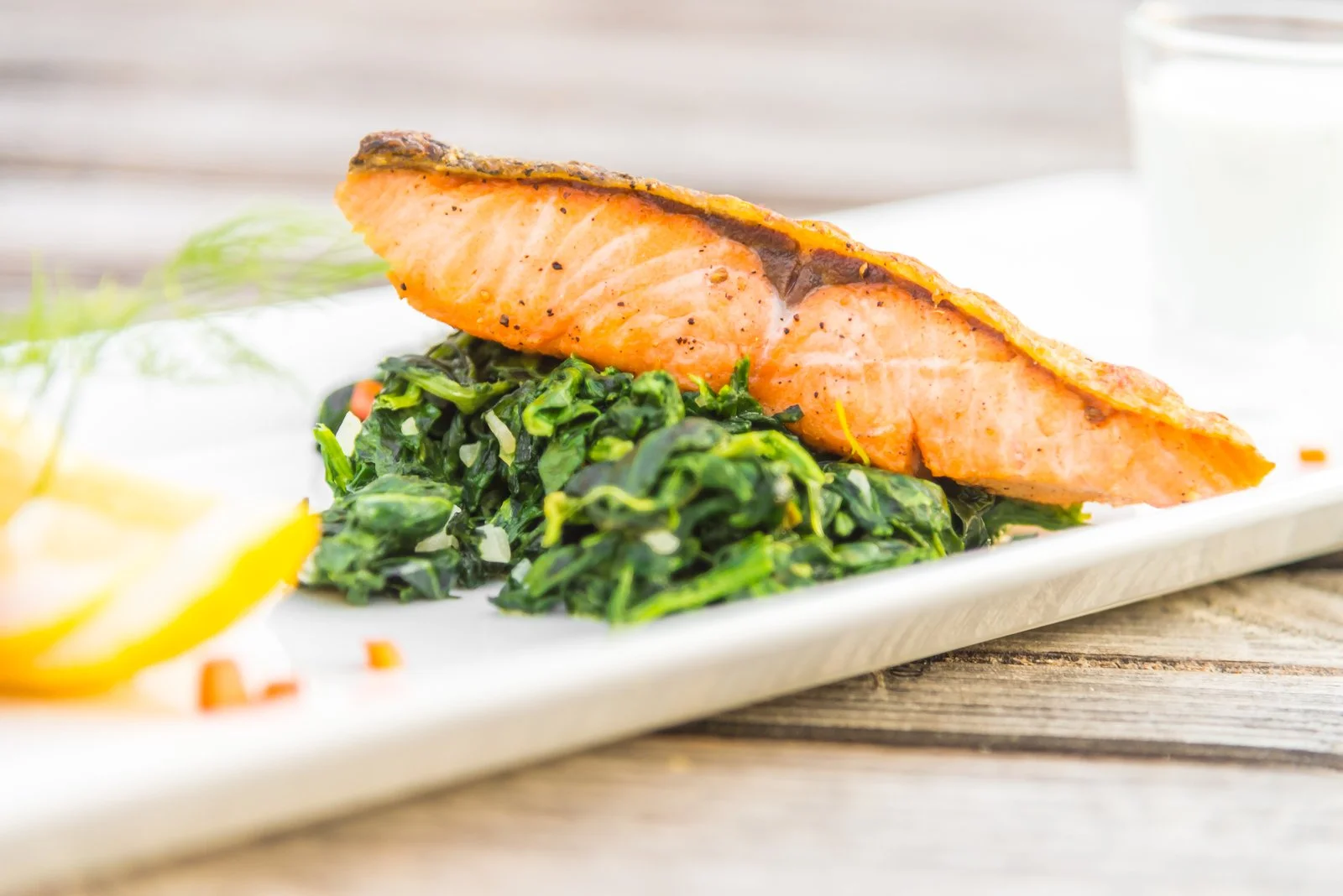
Shark, swordfish and marlin are the only fish to cut out completely, because their position at the top of the food chain means they accumulate much higher mercury levels than other species. Everything else, salmon, mackerel, sardines, cod, prawns and more, is not just permitted but actively encouraged, since the omega 3 benefit generally outweighs the much smaller contaminant risk at normal UK eating levels.
Building meals around the nutrients pregnancy actually asks more of
Away from the avoid list, most of pregnancy nutrition is just good general eating with a slightly bigger emphasis on a handful of nutrients. You do not need to eat for two in terms of calories, extra calorie needs only really increase in the third trimester and even then only modestly, but your requirements for several specific nutrients go up from very early on.
Iron
Blood volume expands significantly in pregnancy
- Lean red meat
- Beans and lentils
- Fortified breakfast cereals
- Dark leafy greens, paired with vitamin C to help absorption
Calcium
For your baby's developing bones and teeth
- Milk, cheese and yoghurt
- Fortified plant milks
- Tinned fish with soft, edible bones
- Tofu set with calcium sulphate
Protein
Needs rise steadily through the second and third trimester
- Eggs, cooked through or British Lion marked
- Fish and poultry
- Greek yoghurt
- Beans, lentils and tofu
Fibre
Helps with the constipation that pregnancy hormones tend to cause
- Wholegrain bread and pasta
- Oats
- Fruit and vegetables with the skin on
- Beans and pulses
If you are vegetarian or vegan, none of these nutrients are off limits, they simply need a bit more planning around plant sources, and iron from plants absorbs better alongside a source of vitamin C, like peppers, citrus fruit or tomatoes, in the same meal.
Making it practical, not another thing to overthink
Start with the two supplements, not a long list
Folic acid and vitamin D cover the biggest, best evidenced gaps. Anything else is a bonus, not a requirement.
Learn the short avoid list rather than fearing all cheese or all fish
It is a handful of specific products, not entire food groups.
Cook meat, eggs and shellfish through, and wash produce
This single habit removes most of the toxoplasmosis and salmonella risk on its own.
Keep half an eye on your total caffeine, not just your coffee
Tea, chocolate and cola all count towards the 200mg daily limit.
Aim for two portions of fish a week, one of them oily
Only shark, swordfish and marlin need to come off the menu entirely.
Common questions
Can I eat sushi while pregnant?
Raw fish that has been previously frozen, which is standard practice for most UK sushi restaurants and supermarket sushi, is considered safe, as freezing kills parasites. Vegetarian and cooked sushi, such as tempura or cooked salmon rolls, carry no additional risk at all.
What about soft boiled or runny eggs?
Eggs stamped with the British Lion mark are safe to eat runny or raw, including in dishes like homemade mayonnaise, because they come from hens vaccinated against salmonella. Eggs without the stamp, including many imported or unstamped eggs, should be cooked until both the yolk and white are completely solid.
Is decaf coffee completely caffeine free?
Not quite, decaf typically contains a small residual amount of caffeine, but it is low enough that it is not usually worth counting towards your daily limit unless you are drinking a lot of it.
Can I still have peanuts if I am not allergic?
Yes. Current UK guidance no longer advises avoiding peanuts in pregnancy unless you have a known allergy yourself. There is no good evidence that eating peanuts during pregnancy increases your child's risk of a peanut allergy.
Do I really need to avoid all alcohol, even a small glass on a special occasion?
UK guidance is to avoid alcohol completely throughout pregnancy, because no safe lower limit has been established. If you did have a drink before finding out you were pregnant, try not to worry, the risk from occasional light drinking before you knew is generally considered low, but going forward the advice is to stop entirely.
The Bottom Line
Pregnancy nutrition in the UK really comes down to two supplements, a short and specific list of foods to avoid, and otherwise eating the varied, mostly wholefood diet that is good for anyone. Learn the reasons behind the rules once and the rest of pregnancy becomes a lot less stressful at mealtimes.