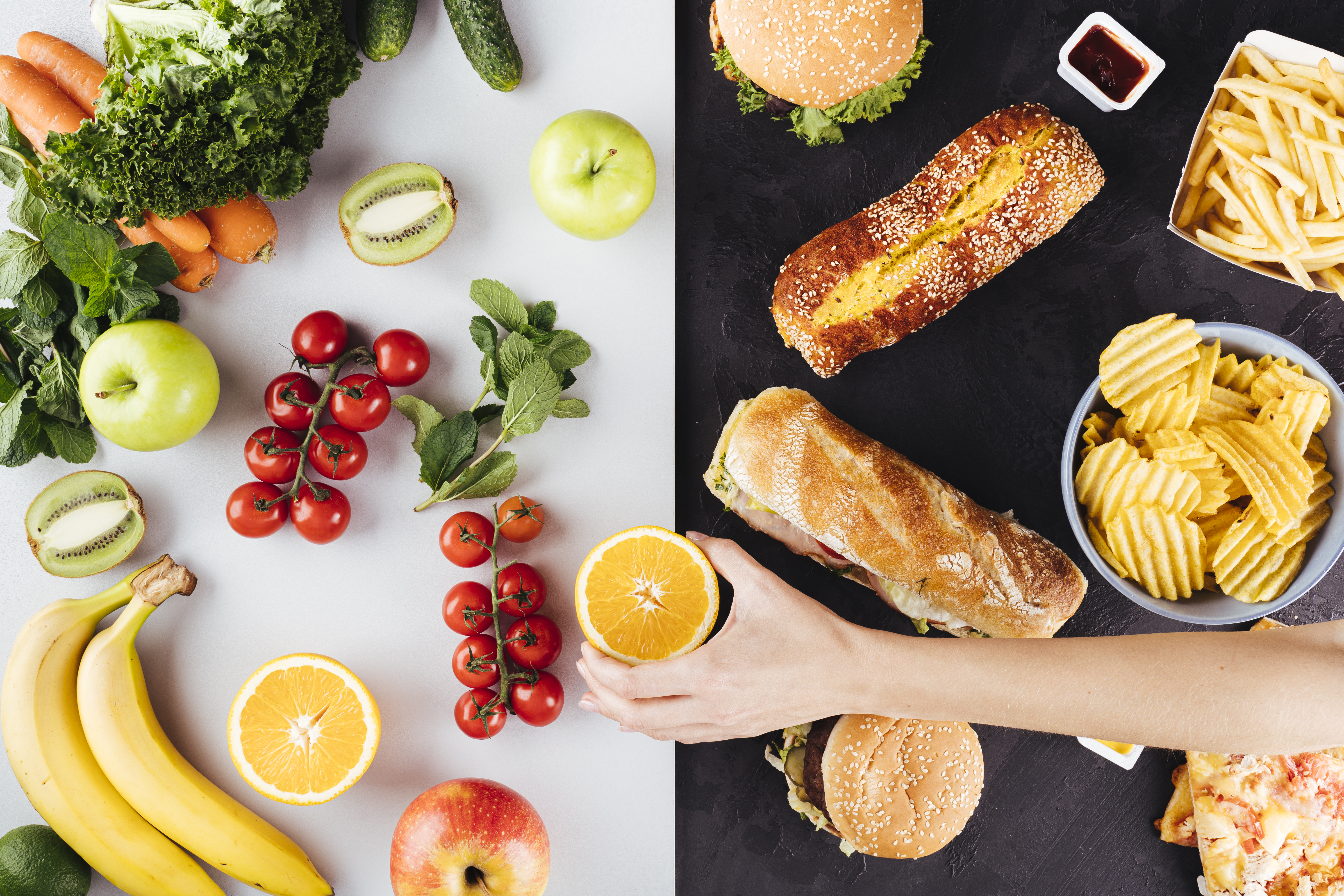

You've probably heard the term "ultra-processed food" thrown around more than a few times lately. It's been in the headlines, in government reports, and dominating conversations at Imperial College's, landmark 2026 conference on nutrition policy. And yet, despite the noise, new research published in April 2026 has revealed something that should give us all pause:
73% of UK adults are familiar with the term “ultra-processed food”
...but only 13% can correctly categorise food items as ultra-processed
That's not a small gap. That's a chasm. It means the vast majority of us walk into a supermarket convinced we'd know an ultra-processed food when we saw one — and most of us are wrong. So what exactly are these foods, why are they so difficult to identify, and what does the latest science say about why it matters?
What Actually Makes a Food "Ultra-Processed"?
The term comes from the NOVA classification system, a framework developed by Professor Carlos Monteiro at the University of São Paulo. It divides all foods into four groups based on the extent and purpose of their processing:
Group 1
Unprocessed or minimally processed
- Fresh fruit
- Vegetables
- Plain meat
- Eggs
- Plain milk
- Legumes
Group 2
Processed culinary ingredients
(Used to cook with, not eaten on their own.)
- Olive oil
- Butter
- Flour
- Salt
Group 3
Processed foods
(made by adding Group 2 ingredients to Group 1 foods)
- Flavour enhancers
- Emulsifiers
- Stabilisers
- Artificial colours
Group 4
Ultra-processed foods
- Formulations made mostly from substances extracted from foods (fats, starches, sugars, proteins) or synthesised in laboratories
- Flavour enhancers
- Emulsifiers
- Artificial colours
That last category is where things get complicated. It's not simply "junk food." It's about a manufacturing process that strips food of its original structure, adds back engineered ingredients to restore palatability and extend shelf life, and produces something that looks like food, tastes extremely good, but behaves quite differently once it's inside your body.
Why Is It So Difficult to Identify?
People are fairly good at spotting the obvious ones. Crisps? Ultra-processed. Cola? Yes. Chicken nuggets? Definitely. But what about flavoured yogurt, plant-based meat alternatives, granola bars, or wholegrain breakfast cereals? That's where most people — including those who actively try to eat healthily — struggle to draw the line.
The problem is that ultra-processed foods have become experts at wearing the costume of health food. You could call it "Marketing Makeup"!
Consider a packet of granola. The packaging features wholesome imagery: golden oats, nature, warmth. The front says "high in fibre" and "no artificial colours." But turn it over and scan the ingredients: glucose syrup, palm oil, soy lecithin, flavouring, humectant (also called glycerol). These are the fingerprints of ultra-processing. The same goes for many plant-based burgers, flavoured oat milks, and virtually every "low-fat" product on the shelf — the fat comes out, but a barrage of thickeners, flavour enhancers and sugar goes in to compensate.
What the Latest Research Says About the Health Risks
The health risks associated with ultra-processed food aren't speculative. They're well-documented, and the evidence base is growing fast.
At the Imperial College London UPF conference in March 2026, Professor Monteiro argued that the harms go far beyond poor nutritional profiles. It's the whole package: the way food matrices are disrupted, the additives (emulsifiers, artificial sweeteners, flavour compounds), packaging chemicals, and crucially — the way these products are engineered to drive overconsumption. Dr Ashley Gearhardt drew direct parallels with the tobacco industry, noting both employ "engineered characteristics" designed to optimise consumption behaviour.
The specific risks now linked to heavy UPF consumption include:
Obesity — UPFs make up over 50% of daily energy intake for UK adults, contributing to excess calorie consumption
Type 2 diabetes — through disruption of insulin sensitivity and the gut microbiome
Hypertension and cardiovascular disease — elevated sodium, saturated fats, and inflammatory additives
Certain cancers — including breast and colorectal cancer, identified in large cohort studies
Non-alcoholic fatty liver disease (NAFLD) — a 2025 UK Biobank study of over 143,000 participants found strong associations with severe liver disease
Dr Sam Dicken highlighted a critical policy gap: "Under the current UK national dietary guidelines, one could consume a diet that was classified as healthy, despite eating a large proportion of UPFs." The existing frameworks simply don't account for degree of processing — only nutrients.
The UK's UPF Problem in Numbers
Over 50% of UK adults' daily calories come from ultra processed foods. 66% of children's daily energy comes from ultra processed foods. Over 70% of school lunches contain ultra processed food products and over 41% of baby food main meals have excess sugar.
At the same time, 94% of UK respondents recognise that UPFs are harmful — suggesting we're not short of public awareness. What we're short of is the knowledge to act on it, and the system-level changes to make minimally processed food affordable and accessible to everyone.
7 Ultra-Processed Foods That Might Surprise You.
Even committed health-eaters are often caught off-guard by these:
Flavoured yogurts — The fruit compotes and "natural flavours" push most varieties firmly into Group 4 territory.
Granola and granola bars— Almost universally ultra-processed, regardless of "wholefood" branding.
Plant-based meat alternatives— The ingredients list of many vegan burgers is longer than that of a real sausage.
Flavoured oat milks— Plain oat milk sits in Group 3; sweetened and flavoured versions often don't.
Wholegrain breakfast cereals— Even "healthy" cereals frequently contain glucose syrup and emulsifiers.
Protein bars— A supplement-food hybrid, almost exclusively ultra-processed.
"Low fat" ready meals— Fat removal is almost always followed by a raft of additives to restore texture and taste.
How to Start Cutting Back — Without Overhauling Your Life
Switching to a fully unprocessed diet overnight isn't realistic for most households. But small, consistent shifts make a real difference.
Practical tips for the supermarket.
Read the ingredients list, not just the front of the pack. The front is marketing. The back is the truth. If you see ingredients you wouldn't find in a home kitchen — emulsifiers, flavour enhancers, modified starches — you're likely looking at Group 4.
Count the ingredients.Minimally processed foods tend to have short lists. A long list, especially one featuring unfamiliar chemical names or E-numbers, is a reliable UPF signal.
Don't trust health-claim packaging."High protein", "low fat", "no added sugar", "natural" — none of these tell you anything about degree of processing. They're marketing language, not regulatory categories.
Cook from scratch more often — even imperfectly.A home-cooked meal with four ingredients beats a "clean eating" ready meal any day.
Use technology to help.Scanning a product's barcode with Bite Insight gives you an instant breakdown of what's really inside — flagging ingredients against your personal health profile in seconds.
The Bottom Line
The fact that 73% of us know ultra-processed foods are bad, but only 13% can accurately spot them, is a perfect summary of where the UK stands right now. We're swimming in awareness and drowning in confusion.
Policy change will help — front-of-pack labelling that reflects processing level, marketing restrictions on UPFs targeted at children, and school food standards that actually exclude the worst offenders are all long overdue. Experts at Imperial's 2026 conference made clear that education alone won't shift population-level consumption patterns.
But while we wait for the system to catch up, you don't have to be powerless. Understanding what "ultra-processed" really means, knowing where it hides, and having the right tools to interrogate a label before it goes in your trolley — that's a meaningful start.
Your body isn't designed to process a 40-ingredient emulsified spread. And now that you know what to look for, neither is your shopping basket.