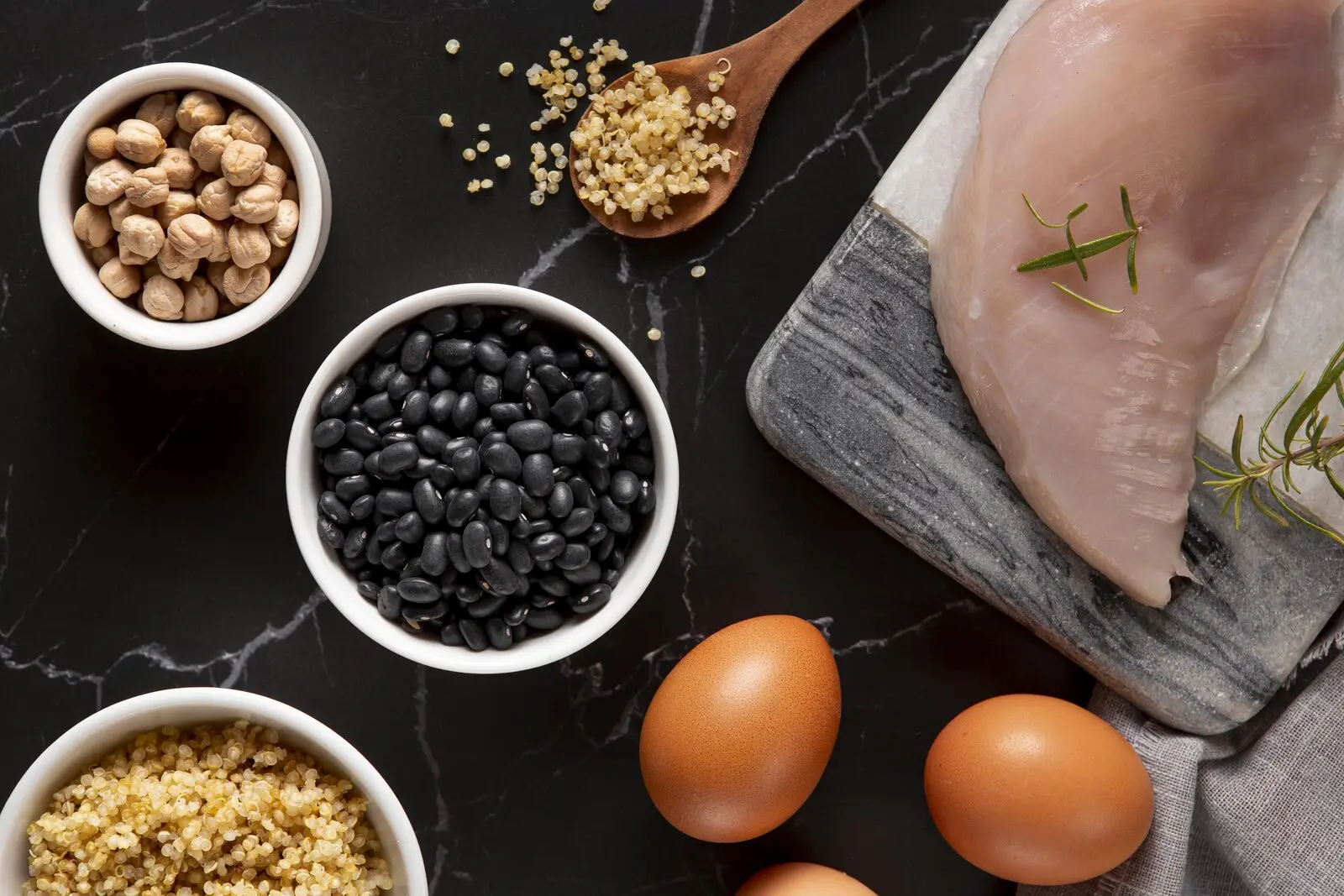

Walk down any supermarket aisle in Britain right now and protein is everywhere. High protein yoghurts, high protein bread, high protein crisps, even high protein water. Sainsbury's has reported searches for high protein meals jumping over 1,200% year on year, and more than half of UK shoppers say they're actively trying to eat more of it.
But here's the question nobody seems to be asking in all the marketing noise. How much protein do you actually need? And is more always better, or is this another case of a genuinely useful nutrient getting turned into a sales pitch?
We looked at what the UK's official guidelines say, what the newer research on ageing and muscle actually shows, and who genuinely benefits from eating more. The honest answer is more interesting than either side of the debate lets on.
The official number versus the trend
The UK's Reference Nutrient Intake for protein is 0.75g per kilogram of body weight per day. For an average woman that works out to around 45g a day, and for an average man around 55g a day. That's roughly a palm sized portion of chicken, fish, tofu or beans at each meal.
Here's the part that surprises most people. This figure isn't a target to aim for. It's the minimum amount needed to avoid deficiency in a generally healthy adult who isn't particularly active. Most of us in the UK already hit it without trying, simply through a normal mixed diet of toast, sandwiches, pasta and a bit of meat, fish or pulses across the day.
57% of UK shoppers say they're following a high protein diet to some degree
Yet most adults already meet the basic requirement before buying a single protein bar
So where does the gap between "official minimum" and "what might actually serve you well" come from? It's in the word minimum. The RNI is set to prevent deficiency, not to optimise muscle, recovery or appetite control. Several expert bodies, including the British Dietetic Association, now suggest that for specific groups, a higher intake brings real, measurable benefits. The trend has simply run ahead of the nuance.
Who actually needs more than the minimum
This is the bit that gets lost in protein marketing. A healthy 25 year old office worker who already eats a varied diet does not need the same amount of protein as a 70 year old recovering from a hip operation, or someone doing three strength sessions a week. Needs genuinely differ, and they differ by a lot.
Protein targets by group
Grams per kilogram of body weight, per day
For a reference weight of 70kg, these ranges translate to roughly the daily totals shown underneath each figure.
Official UK minimum. About 52g a day for a 70kg adult.
Suggested for adults over 65. About 70 to 84g a day.
For regular moderate exercise. About 84 to 98g a day.
For serious strength training. About 112 to 154g a day.
Notice that even the highest bracket here isn't extreme. It's roughly double the official minimum, not five or ten times it, which is where some of the more aggressive "protein maxxing" advice online starts to drift from evidence into performance for its own sake.

The group most people overlook: older adults
If there's one group the protein conversation genuinely should be louder about, it's people over 65. As we age, the body becomes less efficient at using dietary protein to build and maintain muscle, a process researchers call anabolic resistance. At the same time, appetite tends to shrink, meals get smaller, and protein intake often quietly drops rather than rises.
The result is a real risk of sarcopenia, the gradual loss of muscle mass and strength that affects balance, independence and recovery from illness or falls. This is precisely why the British Dietetic Association recommends older adults aim for 1 to 1.2g per kilogram, noticeably above the general RNI, and why spreading that protein across three meals rather than loading it all into dinner seems to help the body use it more effectively.
Muscle isn't just about how you look. It's your body's reserve tank for recovering from illness, surgery and the normal knocks of getting older.
What about everyone else: do you need to worry?
If you're a generally healthy adult eating a varied diet with regular meals, you are very likely already meeting your needs. Protein deficiency is rare in the UK outside of specific medical conditions, very restrictive diets, or situations like recovering from illness where appetite has collapsed.
The exceptions worth genuinely paying attention to are:
- Anyone on weight loss medication such as Mounjaro or Wegovy, where appetite suppression can cut food intake so sharply that protein and fibre are the first things to slip
- People following very low calorie diets for weight loss, where eating less food overall makes it harder to hit even the baseline target
- Vegans and vegetarians who haven't adjusted portion sizes, since plant proteins are often slightly less complete and less easily absorbed than animal sources
- Anyone recovering from surgery, injury or a hospital stay, when protein needs rise to support tissue repair
- People doing regular strength training or endurance sport who want to support muscle recovery and adaptation
Busting the biggest protein myth: does it damage your kidneys?
This one comes up constantly, and it's worth settling properly. The idea that a high protein diet harms healthy kidneys traces back to research from the 1980s involving people who already had kidney disease. Processing large amounts of protein does put extra load on damaged kidneys, and that finding was then, incorrectly, applied to everyone.
Researchers at McMaster University reviewed dozens of studies covering hundreds of participants and found no evidence that higher protein intake harms kidney function in people with no pre-existing kidney disease, even at double the standard recommended amount. The National Kidney Foundation and the Academy of Nutrition and Dietetics both back this up. If you have diagnosed kidney disease, talk to your doctor or dietitian about the right level for you. If your kidneys are healthy, this isn't something that should be holding you back.
Getting enough without overspending
One of the quieter problems with the protein trend is cost. Branded protein bars, shakes and snacks are often among the most expensive ways to hit your target, frequently working out at well over 10p per gram of protein once you account for the packaging and marketing. Whole foods are almost always better value, and often better for you overall.
Best value
Red lentils and tinned pulses
Around 1 to 2p per gram of protein
Dried red lentils are consistently the cheapest source of protein you can buy, with the bonus of fibre and iron. Tinned lentils and chickpeas are nearly as good value and need no soaking.
Eggs
Under 5p per gram of protein
A dozen eggs costs around £2 to £3 and delivers complete, highly absorbable protein. Hard to beat for convenience.
Frozen chicken and chicken thighs
Buying frozen in bulk cuts the price noticeably
Thighs are usually cheaper than breast and just as nutritious. Frozen fillets bought in large bags are a reliable budget staple.
Greek yoghurt and cottage cheese
A genuinely high protein everyday snack
Natural, unsweetened versions give you real protein without the added sugar that creeps into many "high protein" flavoured snacks.

A simple way to spread it through the day
Rather than trying to eat all your protein at one meal, which the body struggles to use efficiently, aim for a reasonable portion at each meal across the day.
Start breakfast with protein, not just carbohydrate
Eggs, Greek yoghurt or a glass of milk alongside your usual toast or cereal makes a real difference, since most people's protein is currently backloaded into the evening.
Build lunch around a protein source first
Tinned fish, leftover chicken, lentil soup or hummus with wholegrain bread all work well and travel easily.
Treat snacks as a chance to top up, not just fill a gap
A handful of nuts, a boiled egg or natural yoghurt beats crisps or biscuits and keeps you fuller for longer.
Keep dinner balanced rather than protein heavy
If breakfast and lunch already included a good source, dinner doesn't need to carry the whole day's target on its own.
Frequently asked questions
Can you eat too much protein?
For healthy adults, there's no strong evidence of harm at the levels most people realistically eat, even on the higher end of the ranges above. Extremely high intakes sustained over years in people with underlying kidney issues are a different matter, which is why existing health conditions always change the advice.
Is plant protein as good as animal protein?
Plant proteins can absolutely meet your needs, but many are missing one or more essential amino acids on their own, and tend to be slightly less digestible. Eating a variety across the day, such as beans with rice, or lentils with wholegrain bread, covers this easily without any need for special combining at every single meal.
Do I need a protein shake or supplement?
Most people don't. Whole food sources are cheaper, come with other nutrients like fibre and vitamins, and are just as effective. A shake can be a convenient top up around exercise if you struggle to eat enough otherwise, but it's a convenience choice, not a necessity for most people.
Why do protein snacks sometimes have so much sugar?
Manufacturers often add sugar or sweeteners to make high protein versions of biscuits, cereal bars and yoghurts taste better, since stripping out fat or carbohydrate can leave a product bland. Always flip the pack over and check the full nutrition panel rather than trusting the front of pack claim alone.
The Bottom Line
Protein matters, but the UK's protein boom is selling most people something they already have. If you're generally healthy and eating a varied diet, you're very likely meeting your needs already. Where it genuinely pays to pay attention is if you're over 65, training hard, on weight loss medication, or recovering from illness. For everyone else, a boiled egg beats a branded bar every time, for your body and your bank account.