
Fish oil capsules sit in more UK kitchen cupboards than almost any other supplement. People take them for their heart, their joints, their mood, their skin. The branding is everywhere, and the logic feels sound. Oily fish is good for you, so a concentrated capsule of its fat must be even better.
Except that is not quite what the research says. Some of the largest heart trials ever run on omega-3 have come back disappointing, and the UK's own health bodies now say the pills are not something to rely on for heart protection. At the same time, the fat itself, eaten the way it comes in food, still looks genuinely important. This is a case where the gap between the supplement aisle and the evidence is wide, and it is worth understanding exactly where that gap sits.
What omega-3 actually is
Omega-3 is not one thing. It is a family of fats, and the three that matter for your diet behave quite differently from one another.
- ALA (alpha linolenic acid), found in walnuts, flaxseed, chia seeds and rapeseed oil. This is the form most plant foods provide.
- EPA (eicosapentaenoic acid), found mainly in oily fish, and linked most strongly to effects on inflammation and blood fats.
- DHA (docosahexaenoic acid), also from oily fish, and structurally important in the brain, the retina and the nervous system.
Your body can turn some ALA into EPA and DHA, but the conversion is slow and limited. Reviews put the share of ALA that becomes EPA at somewhere between 8 and 20 percent, and the share that becomes DHA at well under 10 percent, often closer to 1 percent in adults. Women of reproductive age convert it somewhat more efficiently than men, which is thought to be linked to oestrogen, but even then the numbers stay low.
Under 10% of the ALA you eat from walnuts, flaxseed or rapeseed oil is converted into DHA
That is why a food heavy in plant omega-3 is not automatically a substitute for oily fish
In practical terms, this means a handful of walnuts and a 140g fillet of mackerel are not interchangeable, even though both get filed under "omega-3." If EPA and DHA are what you are after, oily fish and marine sources do most of the work.

What UK adults are actually eating
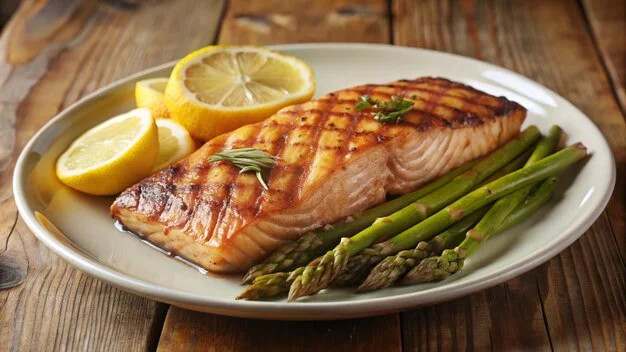
The official guidance from the NHS and the British Dietetic Association is to eat at least two portions of fish a week, one of which should be oily, such as salmon, mackerel, sardines, trout or fresh tuna. A portion is roughly 140g cooked weight.
Most of us fall well short of that. The National Diet and Nutrition Survey found that adults aged 19 to 64 eat an average of around 56g of oily fish a week, and adults over 65 eat around 86g. Both figures sit well under the 140g target. A separate analysis of the same survey data found that only about a quarter of the population eats oily fish at all in a typical fortnight, and among those who do eat it, the proportion actually hitting the recommended amount is small across every age group.
Oily fish in the UK diet
Where intake actually sits
recommended weekly portion of oily fish
average weekly intake, adults 19 to 64
of the population eats oily fish regularly at all
So the starting point for most people is not too much omega-3 from a questionable pill. It is too little omega-3 from food, full stop.
Does the fish oil pill actually work?
This is where things get uncomfortable for the supplement industry. For years, fish oil capsules were sold on the strength of observational studies linking oily fish eaters to lower heart disease risk. The logical next step, that concentrating the fat into a pill would give you the same protection, turned out to be a much harder thing to prove.
A 2018 Cochrane review, one of the most rigorous forms of evidence available, pooled 79 randomised trials covering tens of thousands of people. Its conclusion was blunt. Long chain omega-3 supplements, including fish oil, showed little to no effect on the risk of heart attack, stroke or death from any cause. The same review found a small signal that omega-3 from plant sources, such as rapeseed oil and nuts, might offer a modest protective effect, though the evidence there was weaker.
Taking long chain omega-3 supplements such as fish oil does not benefit heart health or reduce our risk of stroke or death from any cause.
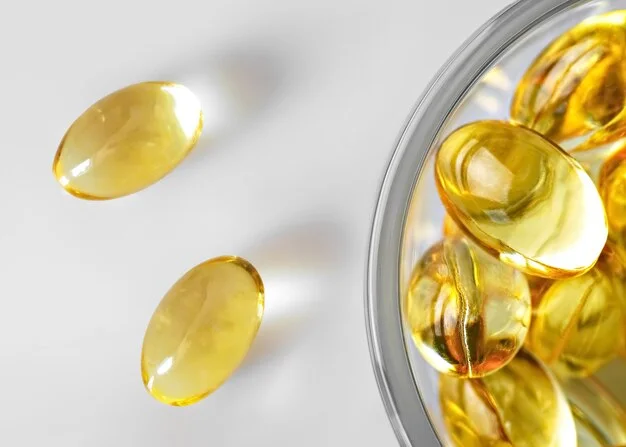
The British Heart Foundation now points to NICE guidance that does not recommend fish oil supplements for preventing heart and circulatory disease. Their advice is not to drop oily fish or plant omega-3 sources from your plate, only to stop expecting a capsule to do the job that whole food evidence was originally built on.
There is one notable exception. A large trial called REDUCE-IT tested a high dose, prescription only form of pure EPA in people who already had heart disease or diabetes plus other risk factors, alongside statins and raised triglycerides. It found a meaningful reduction in cardiovascular events. But the dose used was roughly four grams of EPA a day, far beyond what a standard over the counter capsule provides, and other large trials testing different omega-3 formulations at lower doses have not reproduced that result. Researchers who study this area have been clear that you cannot extrapolate from a specific prescription drug trial to the generic fish oil capsules sold in pharmacies and supermarkets.
Why food still looks different to a pill
If the pills underwhelm, why does oily fish keep showing up as protective in dietary research? A few reasons are worth sitting with.
Fish is a package, not an isolate
Oily fish brings protein, vitamin D, selenium and iodine alongside EPA and DHA. A capsule gives you one fraction of that package, isolated from everything else it normally travels with.
Replacement effect
Eating fish for dinner usually means eating less of something else, often red or processed meat. That swap may carry benefits of its own that a supplement, taken on top of your normal diet, cannot replicate.
Dose and form vary wildly
Supplement trials have used very different doses, ratios of EPA to DHA, and formulations. Lumping them together as "fish oil" can hide genuine differences in what actually works.
When a supplement does make sense
None of this means omega-3 supplements are pointless for everyone. There are specific situations where the evidence, or simple practicality, makes a reasonable case for one.
You are vegan or vegetarian
Since ALA converts to DHA so poorly, people who do not eat fish are often genuinely short of it. An algae based DHA and EPA supplement is a direct, well evidenced way to close that gap without eating fish.
You are pregnant or trying to conceive
DHA supports the developing brain and retina. If oily fish is not realistic, a vegan or standard DHA supplement at a sensible dose is a reasonable substitute, though UK advice still limits total oily fish intake in pregnancy to two portions a week because of mercury.
You have been told your triglycerides are high
This is a conversation for your GP, not a supermarket aisle. Prescription strength EPA is a licensed treatment in specific circumstances, and it is a different product entirely from an over the counter capsule.
You simply do not like or cannot eat fish
A modest, good quality supplement is a sensible backup plan. It will not match the full nutritional package of oily fish, but it beats getting none of the fat at all.
Getting it from food instead
For most people without a specific medical reason to supplement, the more useful question is not which brand of fish oil to buy, but how to get two portions of fish a week onto the plate, with one of them oily.
| Food (per 100g) | Approx. EPA + DHA | Type |
|---|---|---|
| Mackerel | ~2,500mg | Oily fish |
| Salmon | ~1,000 to 2,000mg | Oily fish |
| Sardines | ~1,000 to 1,500mg | Oily fish |
| Fresh tuna | ~500 to 1,000mg | Oily fish |
| Trout | ~500 to 1,000mg | Oily fish |
| Walnuts | ALA only, no direct EPA/DHA | Plant source |
| Rapeseed oil | ALA only, no direct EPA/DHA | Plant source |
| Flaxseed | ALA only, no direct EPA/DHA | Plant source |
Farmed salmon is worth a quick note. Research has found that farmed salmon today often contains noticeably less EPA and DHA than it did twenty years ago, largely because feed formulations have shifted towards more plant based oils. It is still a good source, just not quite the powerhouse it once was, which is one more reason to vary your fish rather than relying on a single type.

Tin it
Tinned mackerel, sardines and salmon are cheap, keep for months and need no cooking. Mashed onto toast or stirred into a salad, they are the easiest way to hit your weekly portion.
Batch it into the freezer
Salmon fillets and mackerel freeze well. Buying a batch when on offer and portioning it out removes the excuse of "we don't have any in."
Add plant omega-3 on top, not instead
Walnuts, chia seeds, flaxseed and rapeseed oil are genuinely good additions to a diet, and the Cochrane data suggests a small heart benefit. Treat them as a bonus alongside oily fish, not a replacement for it.
Is it safe to take a fish oil supplement every day?
For most healthy adults, a standard dose fish oil supplement is considered safe. The main caution is for people on blood thinning medication, since high doses of omega-3 can have a mild blood thinning effect of their own. Check with a pharmacist or GP if that applies to you.
Does cooking destroy the omega-3 in fish?
Some loss happens with any cooking method, but gentle methods such as steaming, baking or poaching preserve more than deep frying at high heat. Tinned fish retains a good amount of its omega-3 content, which is one reason it is such a practical option.
Are all fish oil supplements regulated for quality?
Fish oils can oxidise and turn rancid over time, which affects both taste and quality. Independent testing schemes exist, but not every product on a supermarket shelf carries one. Keeping capsules in the fridge, buying smaller pots and checking for a rancid, fishy smell when you open a new bottle are simple ways to judge freshness yourself.
Can vegans actually get enough DHA without fish?
Yes. Algae oil supplements provide EPA and DHA directly, without going through the inefficient ALA conversion process, because algae is where fish get their omega-3 from in the first place. It is currently the most reliable way for someone who does not eat fish to get meaningful amounts of these two fats.
The Bottom Line
Fish oil capsules are not the heart protecting shortcut they are often sold as, and major trials back that up. The far more useful fix is the boring one. Get two portions of fish a week, make one of them oily, and keep plant sources like walnuts and rapeseed oil as a sensible extra rather than a substitute.