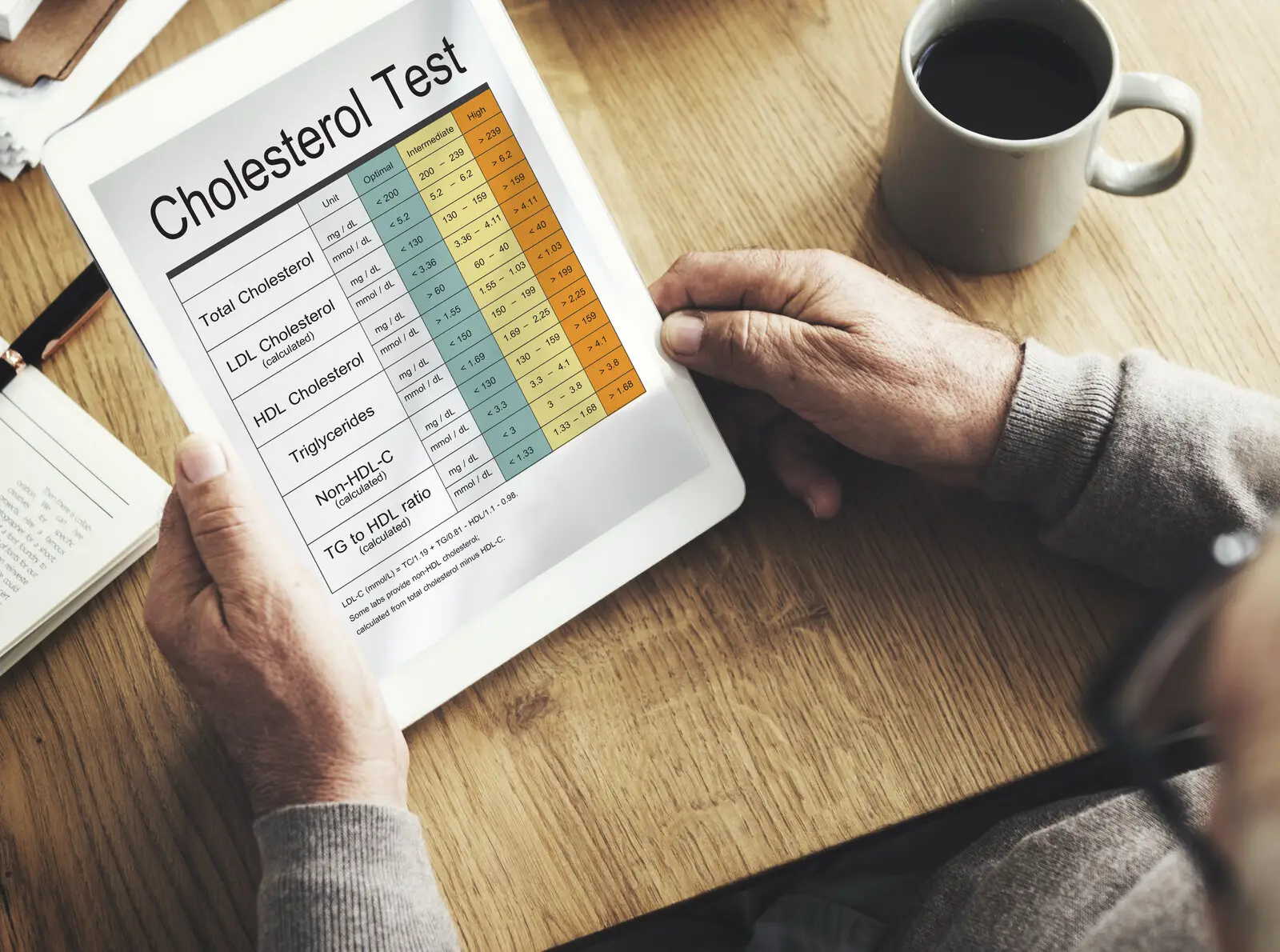

If you've ever had a blood test and seen the word cholesterol followed by a number you didn't fully understand, you're not alone. Roughly half of UK adults have cholesterol levels above the recommended range, and the vast majority feel completely fine. There's no ache, no warning sign, nothing that tells you something is building up quietly inside your arteries. The only way to know is a blood test, and the only way to actually do something about it is to understand what the numbers mean in the first place.
This isn't about scaring you off a bacon sandwich forever. It's about separating what the evidence actually says works from the stuff that gets repeated online without much backing. So let's go through it properly.
What Your Cholesterol Numbers Actually Mean
Cholesterol isn't one single thing. It's a catch all term for several different fats that travel around your bloodstream, each doing a different job and each affecting your heart health in a different way.
Total cholesterol is everything added together. On its own it doesn't tell you a huge amount, because it lumps the good and the bad into one figure.
LDL, often called "bad" cholesterol, is the one that matters most for heart disease risk. It carries cholesterol to your artery walls, where it can build up over years and narrow the blood vessels that feed your heart and brain.
HDL, the "good" cholesterol, works the other way. It carries cholesterol away from your arteries and back to your liver, where your body breaks it down. Higher HDL is generally protective.
Non HDL cholesterol is simply your total cholesterol minus your HDL. Many UK clinicians now treat this as a better overall marker than LDL alone, because it captures all the harmful particles in one number, not just LDL.
Triglycerides are a different type of fat entirely. They tend to rise when you eat more sugar and refined carbohydrate than your body needs, or drink more alcohol than your liver can comfortably process.
Here's roughly what healthy adults in the UK should be aiming for, based on NHS and British Heart Foundation guidance.
| Measure | Healthy target |
|---|---|
| Total cholesterol | Below 5.0 mmol/L (below 4.0 after a heart attack or stroke) |
| LDL cholesterol | Below 3.0 mmol/L (below 2.0 after a heart attack or stroke) |
| Non HDL cholesterol | Below 4.0 mmol/L |
| HDL cholesterol | Above 1.0 mmol/L for men, above 1.2 mmol/L for women |
| Triglycerides (fasting) | Below 1.7 mmol/L |
These are general targets for otherwise healthy adults. If you've already had a heart attack or a stroke, or you live with diabetes, your GP will usually set a stricter goal, because your overall risk sits higher to begin with.
50% of UK adults have a total cholesterol level above the healthy range
...and because there are no symptoms, most only find out from a routine blood test
Why It's Worth Taking Seriously, Even Without Symptoms
High cholesterol has an odd reputation because it doesn't make you feel ill. You can have an LDL level that's been quietly climbing for a decade and notice absolutely nothing. The problem is what it does over time rather than how it feels today.
When too much LDL cholesterol is circulating, it can work its way into the walls of your arteries and combine with other substances to form plaques. Over years, these plaques narrow the blood vessels and make them stiffer, raising the risk of heart attack and stroke. This process, atherosclerosis, is one of the main drivers of cardiovascular disease, which remains one of the leading causes of death in the UK.
There's also a genetic condition worth knowing about called familial hypercholesterolaemia, or FH. It's an inherited fault that stops the liver clearing LDL cholesterol properly, so levels are high from childhood rather than creeping up gradually with age or lifestyle.
Familial hypercholesterolaemia
An inherited condition most people don't know they have
people in the UK may have FH
are thought to be undiagnosed
people estimated to be living with it in the UK
If heart disease or high cholesterol runs strongly in your family, particularly if a parent or sibling had a heart attack before the age of 60, it's worth asking your GP about testing. FH responds well to treatment once it's picked up, but diet changes on their own usually aren't enough to manage it, so this is one case where medical advice matters more than any food swap.
The Egg and Dietary Cholesterol Myth

For decades, the advice was simple. Eat less cholesterol, and your cholesterol will go down. Eggs, prawns and liver all picked up a bad reputation because they're relatively high in dietary cholesterol.
The science has moved on quite a bit since then. For most people, the cholesterol in food has a much smaller effect on blood cholesterol than saturated fat does. Your liver makes most of the cholesterol in your blood itself, and it tends to compensate, making less when you eat more and more when you eat less. Saturated fat, on the other hand, directly pushes your liver to produce more LDL.
This doesn't mean dietary cholesterol is irrelevant to everyone. A minority of people are what researchers call hyper responders, where egg intake does raise their LDL meaningfully. It just means the old advice to obsessively count egg yolks was aimed at the wrong target for most of the population.
The practical takeaway is that a few eggs a week fit comfortably into a heart healthy diet for most people. What matters more is what's eaten alongside them. An egg on wholegrain toast is a very different proposition to a fried breakfast with sausages, bacon and buttered white toast, not because of the egg, but because of everything else on the plate.
Saturated fat, not the cholesterol in your food, is the bigger driver of your LDL level for most people.
What Actually Lowers Cholesterol
This is the part that gets buried under wellness trends and supplement marketing, so let's stick to what has decent evidence behind it.
Soluble fibre
Oats, barley, beans, lentils and fruit like apples and pears are rich in soluble fibre, which forms a gel in your gut that binds to cholesterol and stops some of it being absorbed. The British Heart Foundation points to beta glucan, the specific soluble fibre found in oats and barley, as having a genuine LDL lowering effect once you reach around 3g a day, roughly the amount in a bowl of porridge.
Plant sterols and stanols
These naturally occurring compounds block some of the cholesterol your gut absorbs. They're added to certain yoghurt drinks, spreads and milks sold in UK supermarkets. NHS guidance suggests around 1.5g to 3g a day, taken with meals, can lower LDL by roughly 6 to 12% after about a month. There's no evidence yet that this translates into fewer heart attacks, so treat it as one tool among several rather than a fix on its own, and remember it only works while you keep taking it.
Swapping saturated fat for unsaturated fat
This is probably the single change with the strongest evidence behind it. Swapping butter for olive or rapeseed oil, having oily fish like salmon, mackerel or sardines a couple of times a week, and adding a small handful of unsalted nuts most days all nudge your fat intake toward the unsaturated side, which tends to lower LDL without lowering HDL.
Moving more, drinking less, and stopping smoking
Regular activity raises HDL and can lower triglycerides, even without much change in weight. Cutting back on alcohol brings triglycerides down fairly quickly, since your liver processes alcohol and fat through similar pathways. Stopping smoking is one of the fastest ways to improve HDL, often within weeks of quitting.
Soluble fibre
- Porridge oats
- Barley
- Beans and lentils
- Apples and pears
Unsaturated fats
- Olive and rapeseed oil
- Oily fish
- Unsalted nuts
- Avocado
Fortified with sterols
- Sterol enriched yoghurt drinks
- Sterol enriched spreads
- Sterol enriched milk
Foods That Tend To Push Cholesterol Up

A few everyday UK staples carry more saturated fat than people realise, mostly because they're ordinary and familiar rather than obviously indulgent.
Pastry and pies
- Sausage rolls
- Cornish pasties
- Pork pies
Processed meat
- Bacon
- Salami
- Chorizo
Full fat dairy
- Butter
- Hard cheese
- Double cream
Sweet treats
- Cakes and biscuits
- Chocolate
- Pastries
None of these need to disappear completely. The goal is making them the exception rather than the everyday default, and leaning on the alternatives above most of the time.
Practical Changes To Start This Week
Swap your usual cooking fat
Use olive or rapeseed oil instead of butter or lard for most everyday cooking.
Add a daily portion of oats or barley
Porridge, overnight oats or a barley based soup all count toward your beta glucan target.
Build two meatless days into your week
Beans, lentils and chickpeas bring soluble fibre and protein without the saturated fat.
Have oily fish twice a week
Tinned mackerel or sardines on toast is an easy, affordable way to hit this.
Snack on a small handful of nuts
Unsalted almonds, walnuts or pistachios instead of crisps or biscuits.
Check labels for saturated fat, not just total fat
Look for 1.5g of saturates per 100g or less as a general green light, and use Bite Insight's scanner to compare similar products side by side.
Common Questions
Can diet alone bring cholesterol down, or will I need a statin regardless?
For many people with mild to moderately raised cholesterol, sustained diet and lifestyle changes can bring LDL down meaningfully, sometimes by 10 to 20%, over a few months. Where cholesterol is very high, there's a strong family history, or you already have heart disease, your GP may still recommend a statin alongside the diet changes rather than instead of them. The two aren't in competition, and most people taking statins still benefit from eating well on top.
How quickly will changes to my diet actually show up in a blood test?
Most GPs retest after around 8 to 12 weeks, which is roughly how long it takes for consistent changes to show a measurable difference. Small, short lived tweaks made the week before a test won't do much. It's the pattern over months that counts.
Is coconut oil a healthy alternative to butter?
Not really, despite its reputation. Coconut oil is around 85% saturated fat, which is higher than butter. It's fine occasionally for flavour in small amounts, but it isn't a cholesterol friendly swap for everyday cooking.
Should I stop eating eggs completely?
For most people, no. The evidence doesn't support strict egg avoidance for cholesterol control. If you already know you're sensitive to dietary cholesterol, or your GP has specifically advised limiting them, that's different, but it isn't a blanket rule for everyone.
Does stress actually affect cholesterol?
Indirectly, yes. Chronic stress can raise cortisol, which nudges your liver toward producing more cholesterol, and it often changes behaviour too, less sleep, more comfort eating, less activity. It's a smaller factor than diet, but not nothing.
The Bottom Line
High cholesterol is common, mostly silent, and genuinely responsive to the changes that matter most: more soluble fibre, more unsaturated fat, less saturated fat, and more movement. Get your numbers checked, make the swaps that fit your week, and let the follow up blood test tell you whether it's working.